NL

Turner in Dordrecht

skyline Dordrecht

Turner in Dordrecht - GUIDED WALK

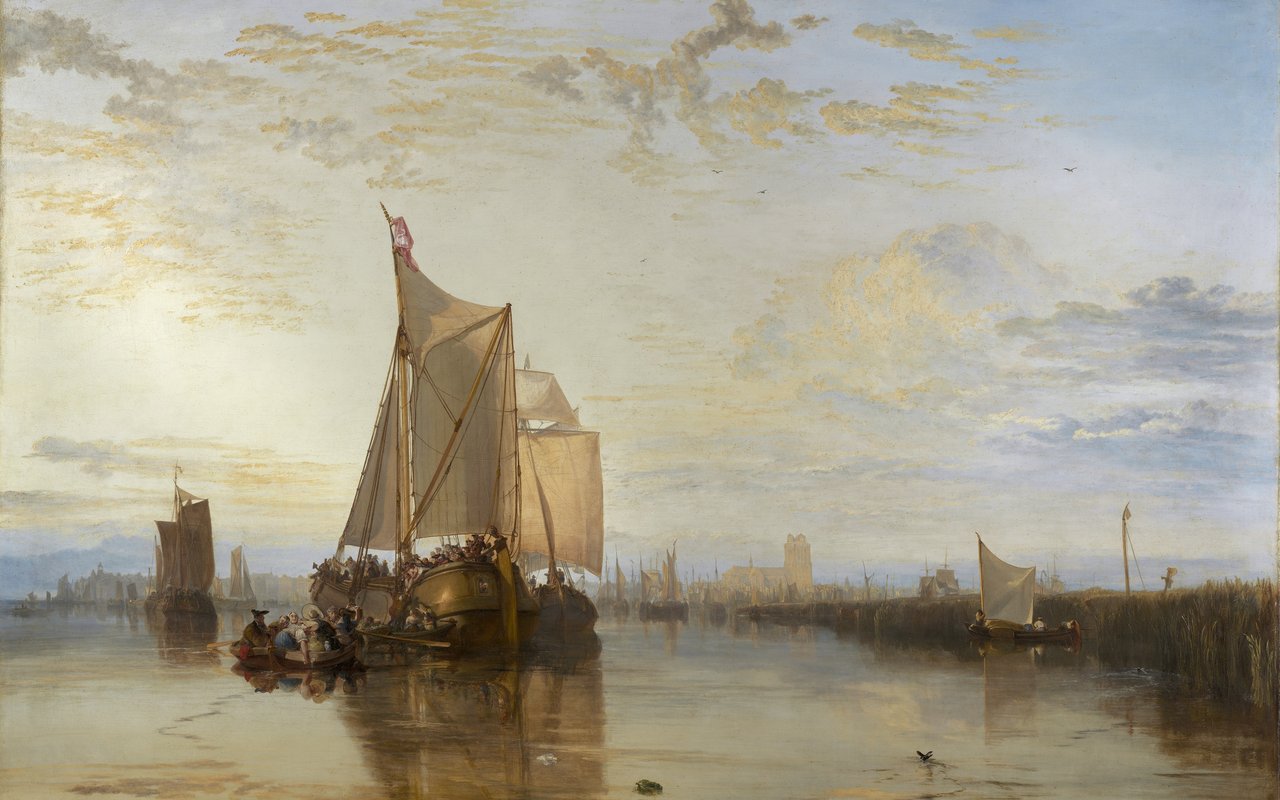
Serene harbours, expansive lakes and tempestuous seas: Joseph Mallord William Turner (1775–1851) is the ultimate painter of water. He captures rivers bathed in the warm evening sun, but also the perils of the wild sea – always in search of ‘the sublime’: the intense sensation of both beauty and threat.Turner was inspired by seventeenth-century Dutch painting. He travelled to the Netherlands, and to Dordrecht, several times: in 1817, 1825, 1833 and, for the final time, in 1835. It is hardly surprising, then, that he found inspiration in Dordrecht, a city where water plays a defining role in its identity, trade and history.

Stroll through Dordrecht and view the city through Turner’s eyes: compare his sketches with old photographs and with the city as it is today. On the map, the route is marked in blue. The stops along the walk are indicated with green dots, and the starting point is the Dordrechts Museum. Use the arrows at the top of the page to move to the next stop. At each location this website offers background information and Turner’s sketches; in some cases you will also find, at the bottom of the page, the option to compare Turner’s sketches with an archival photograph from the period. Using the slider, you can move left and right to view the images side by side. The walk takes approximately 1.5 to 2 hours.

Turner’s Sketches

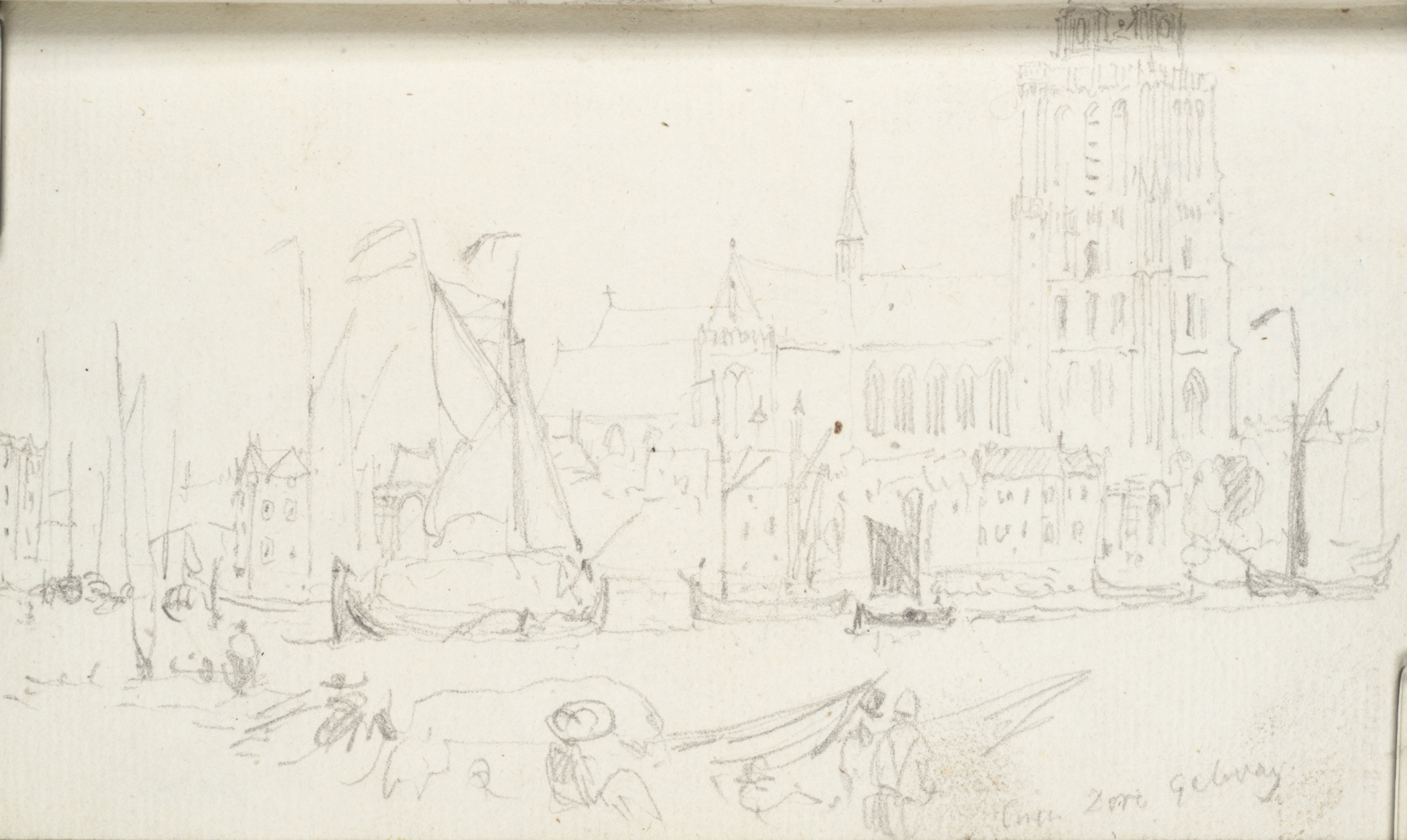
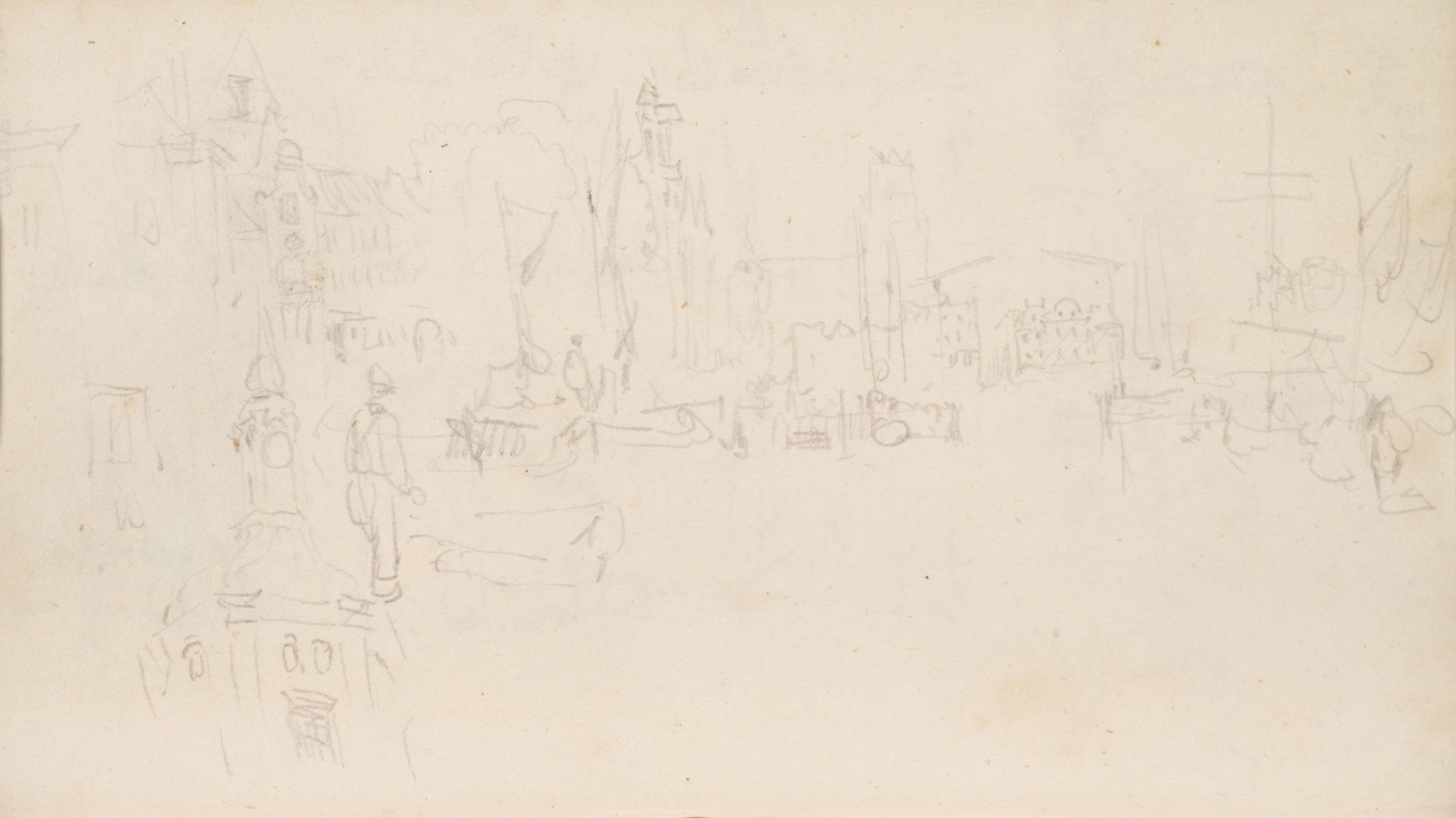
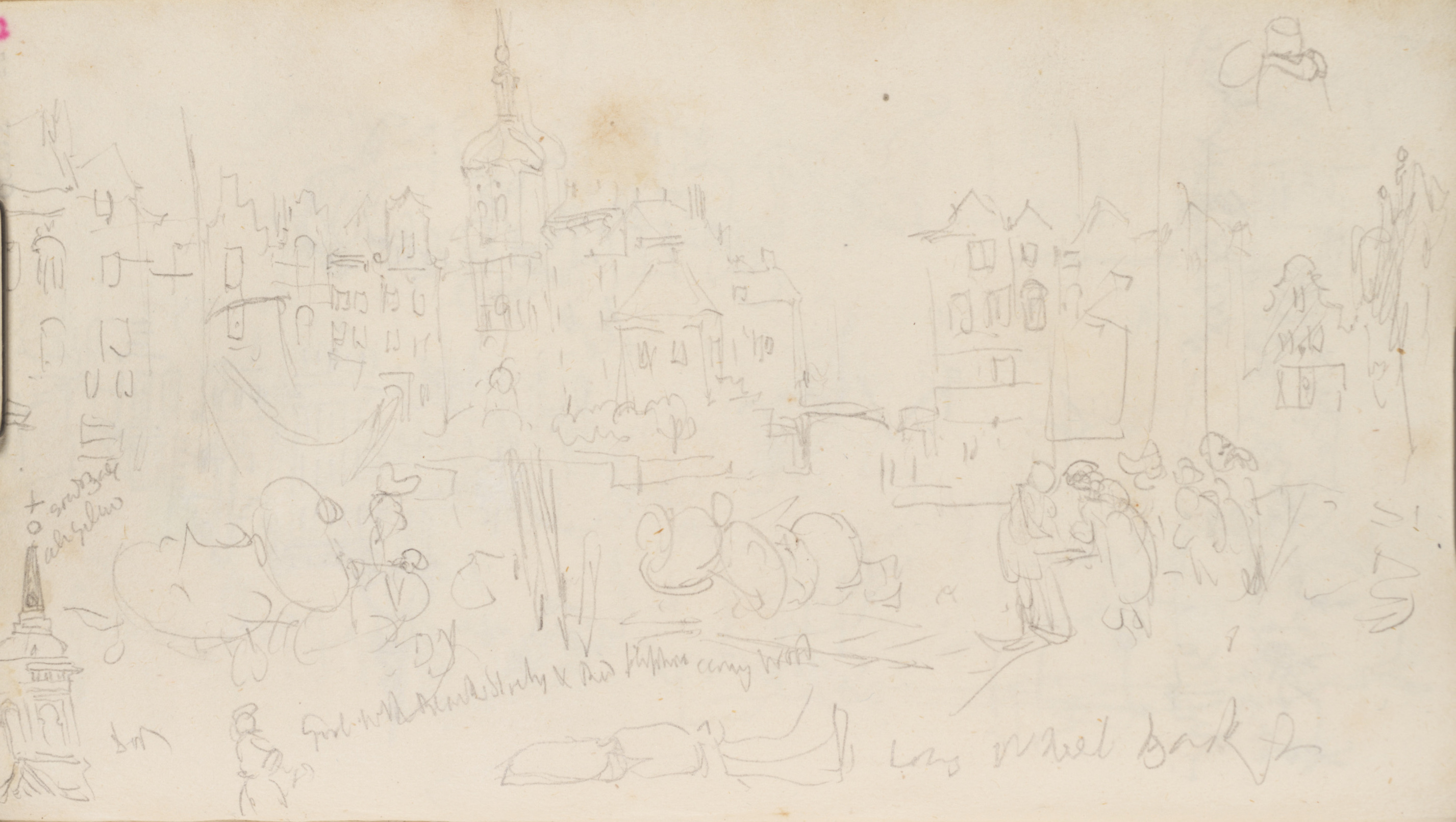
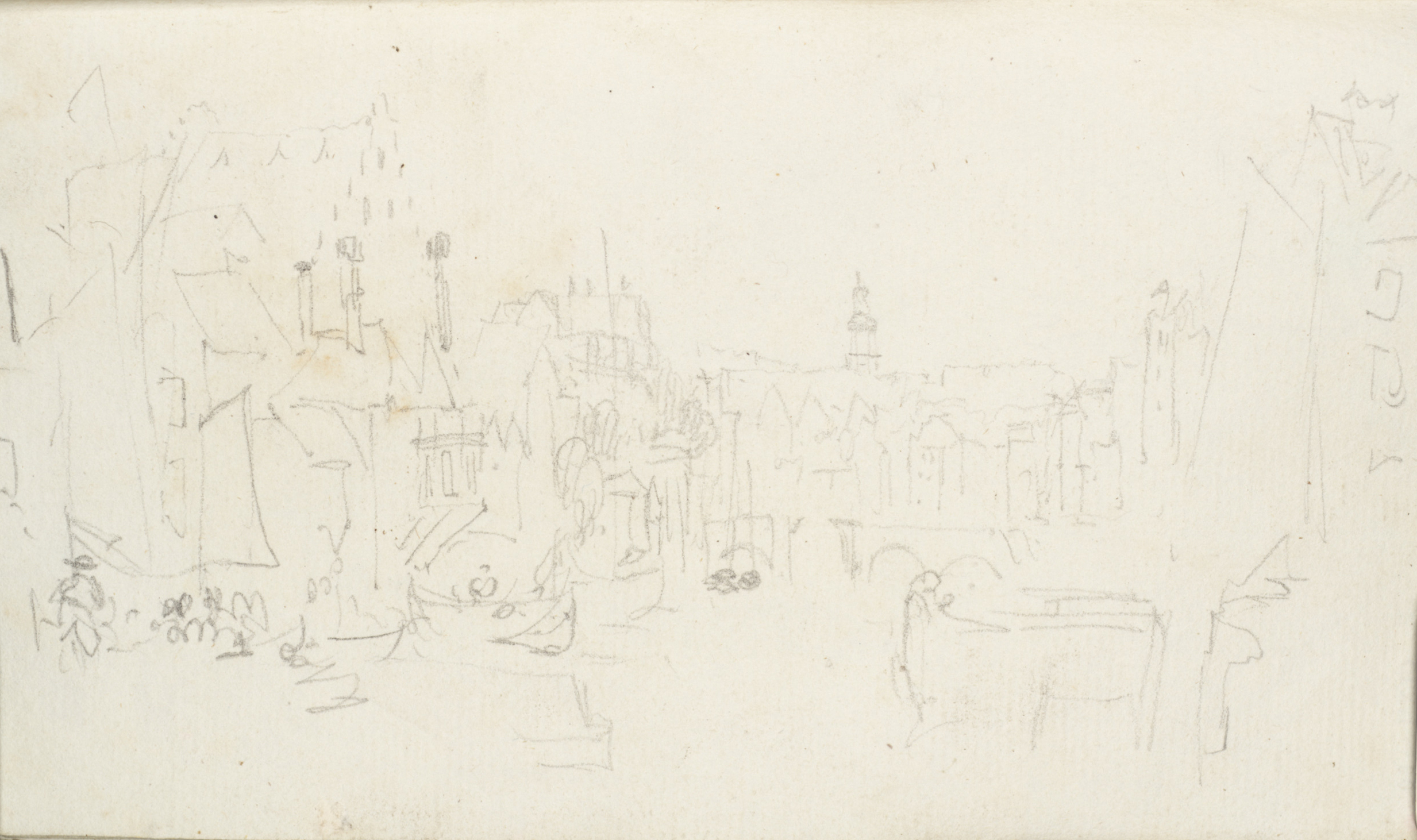
Turner always carried a sketchbook with him. These sketches are not always easy to ‘read’. They are brief drawings in which he captured the key elements of his subject with just a few pencil lines. Turner often filled a single page with several small sketches, or continued drawing onto the facing page. He frequently rotated the sketchbook a quarter turn to switch between portrait and landscape format, and vice versa. In his barely legible handwriting he added short notes or longer lists. It may look rather chaotic, but for Turner these were visual reminders that he could consult back in London when creating his paintings.


1 - Dordrechts Museum

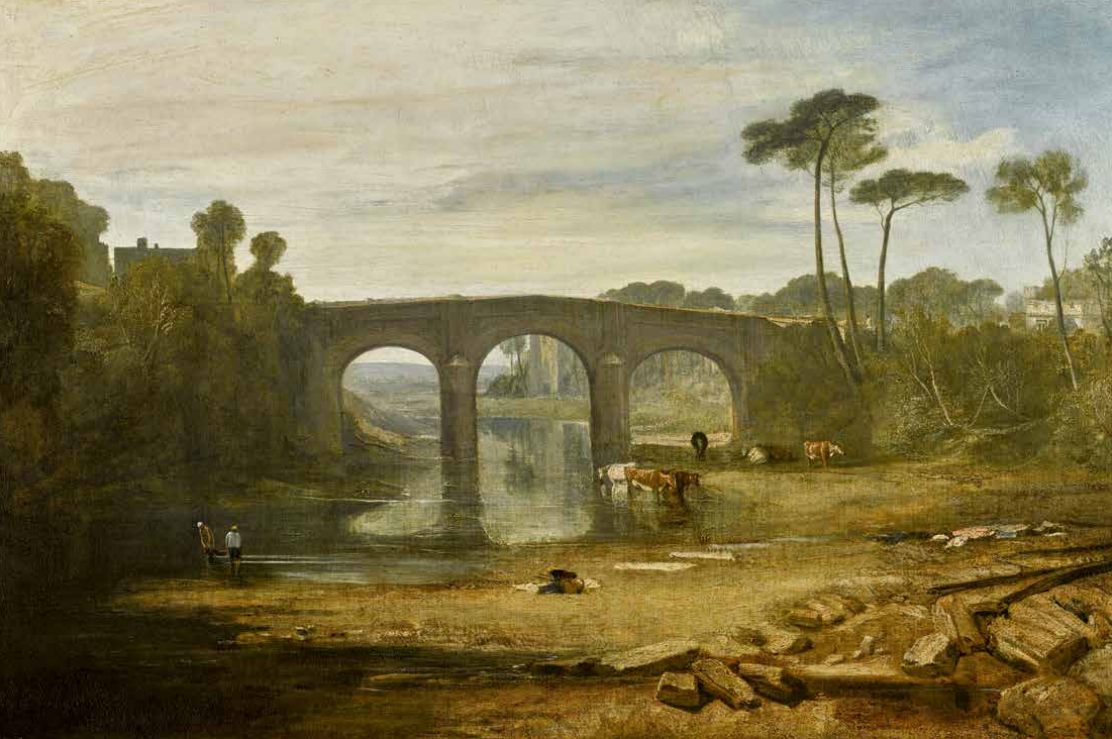
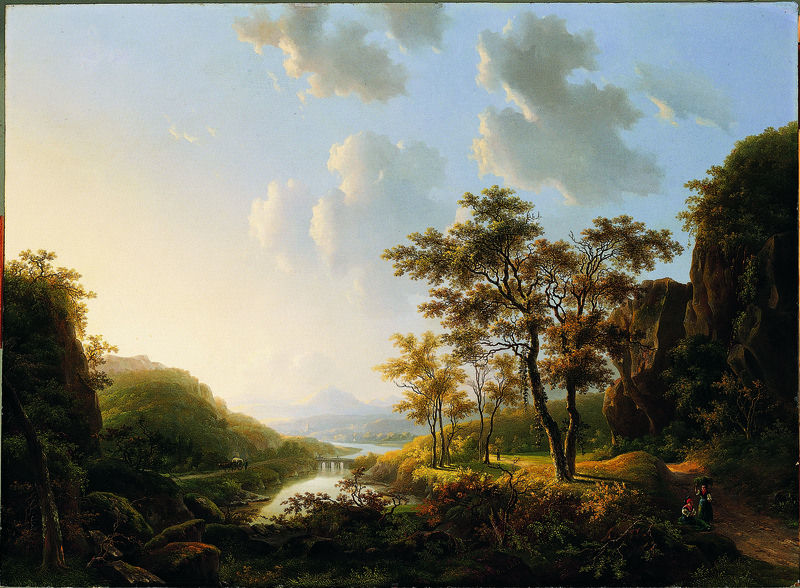
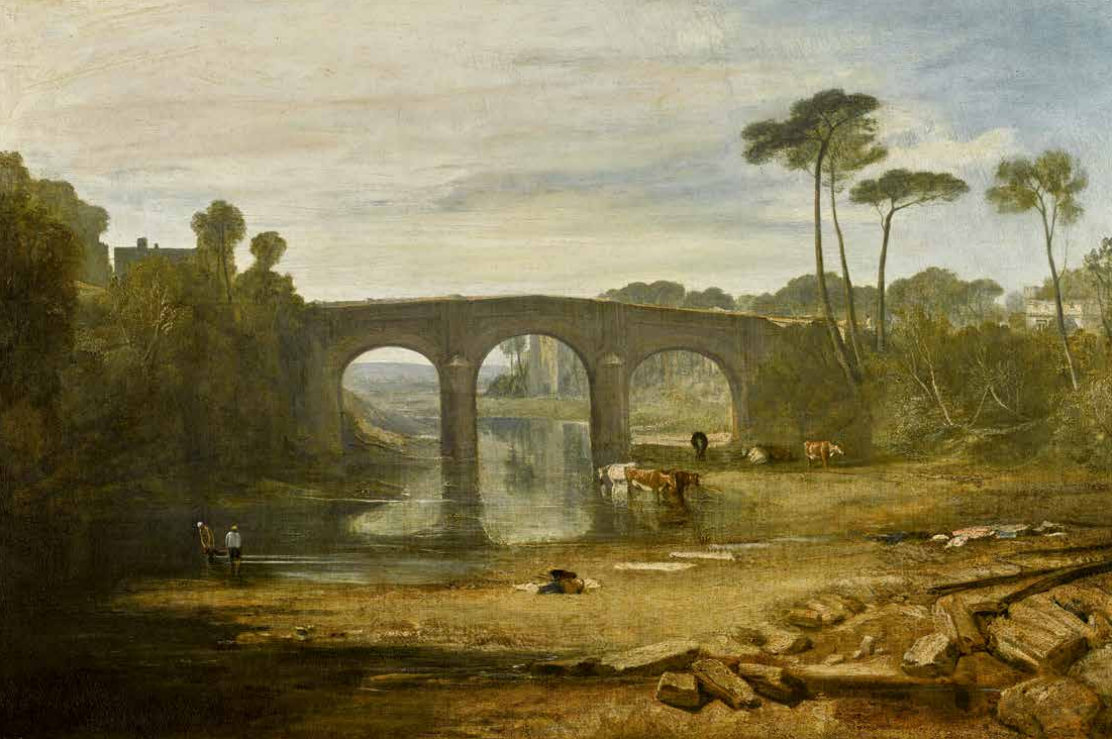
Visit the exhibition Water & Light at the Dordrechts Museum and admire a selection of Turner’s finest paintings and prints from the Paul Mellon Collection (Yale Center for British Art, USA), shown alongside the Dutch masters who inspired him so profoundly, including Dordrecht’s own Aelbert Cuyp. The Dordrechts Museum is one of only two museums in the Netherlands to hold a Turner painting in its collection. Whalley Bridge and Abbey has been on long-term loan to the museum since 2020 and is always on display. It can now be seen within the exhibition.

Water & Light is a two-part exhibition created together with contemporary artist Nicky Assmann (1980), who incorporates the themes of nature, light and water into her kinetic light installations.
From the museum, it is roughly a 15-minute walk to the Grote Kerk.
J.M.W. Turner, Whalley Bridge and Abbey

2 - Grote Kerk

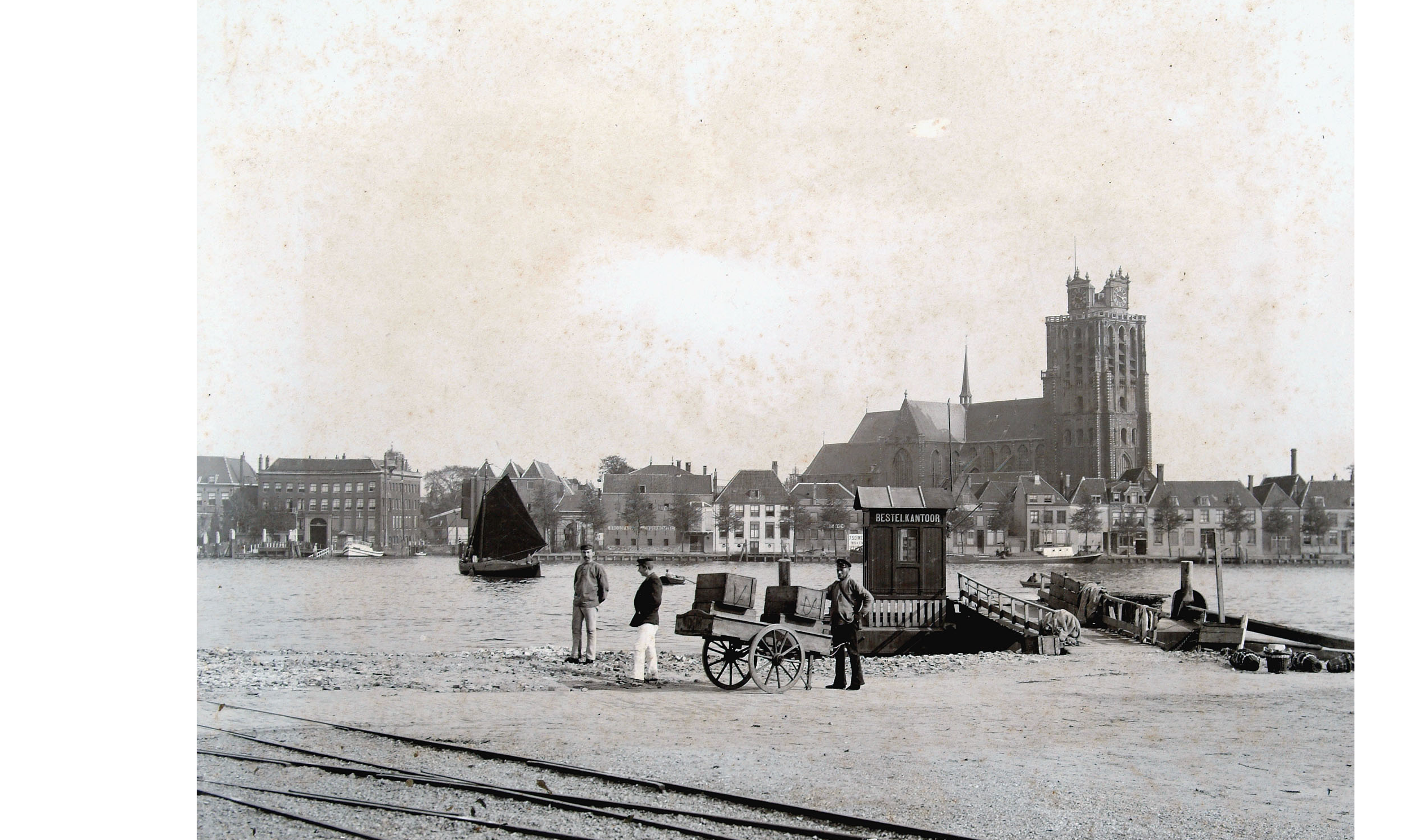
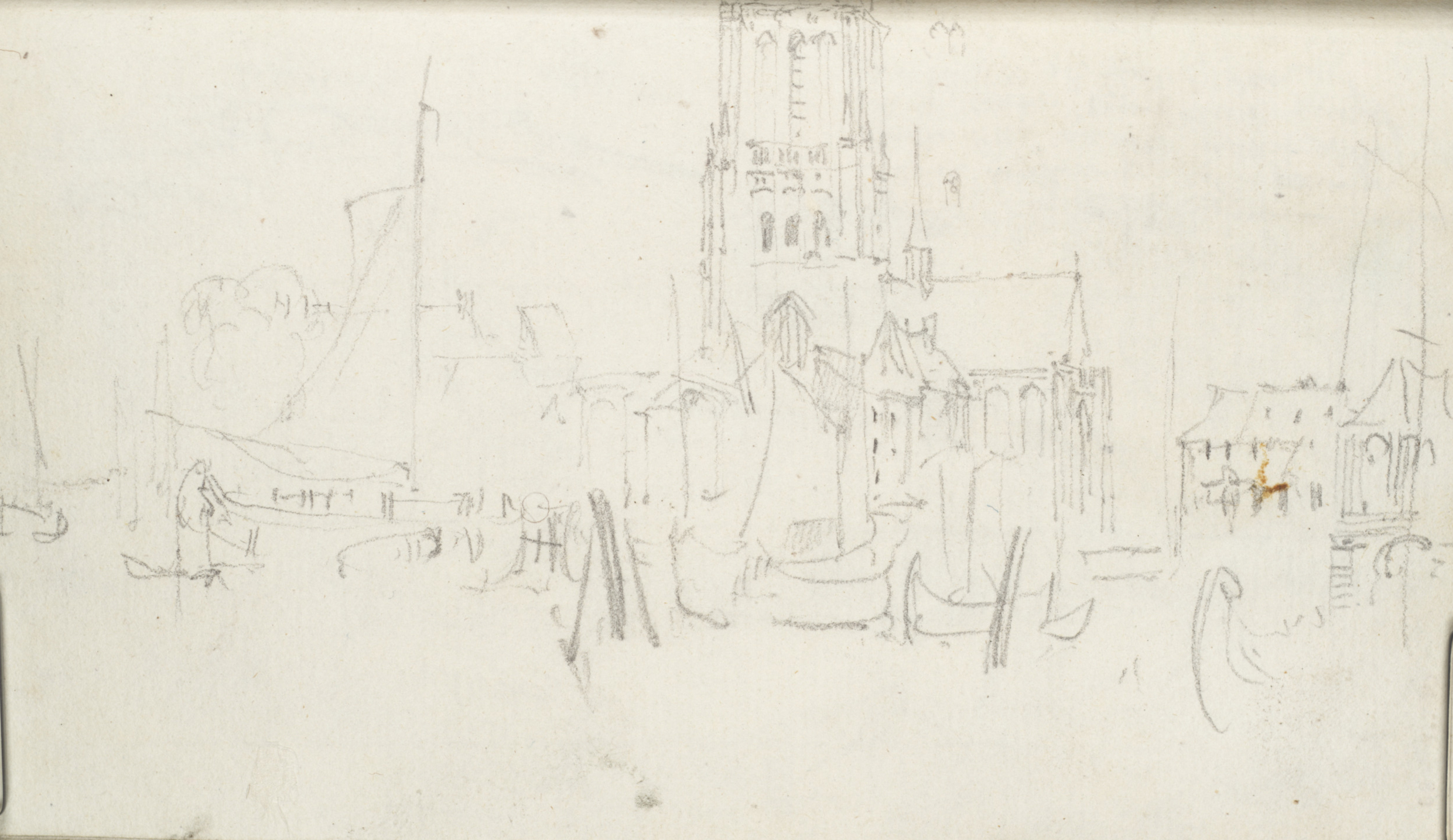
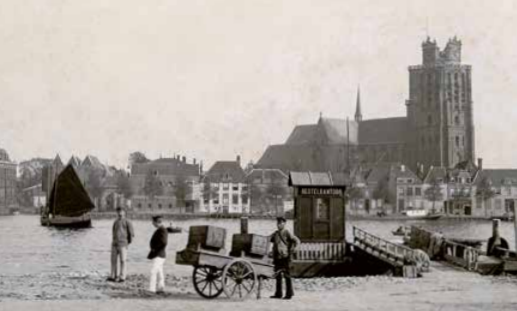
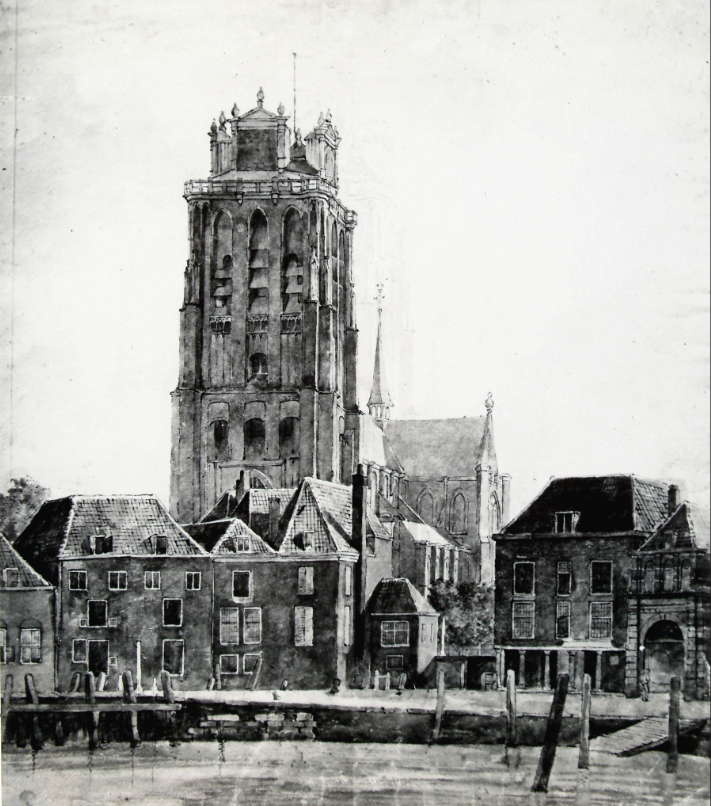
The Grote Kerk is one of the most recognisable landmarks in Dordrecht’s cityscape. From the benches along the Maartensgat you have an excellent view of the church tower. During each of his visits to Dordrecht, Turner sketched the Grote Kerk. In 1817 from many different angles: from afar and up close, from the water or from a quay. Sketches from later visits show the church only from a great distance, viewed from the boat. If you take the waterbus from the Hooikade, you can, if you wish, cross over to Zwijndrecht. Turner sketched the church from the Zwijndrecht ferry.

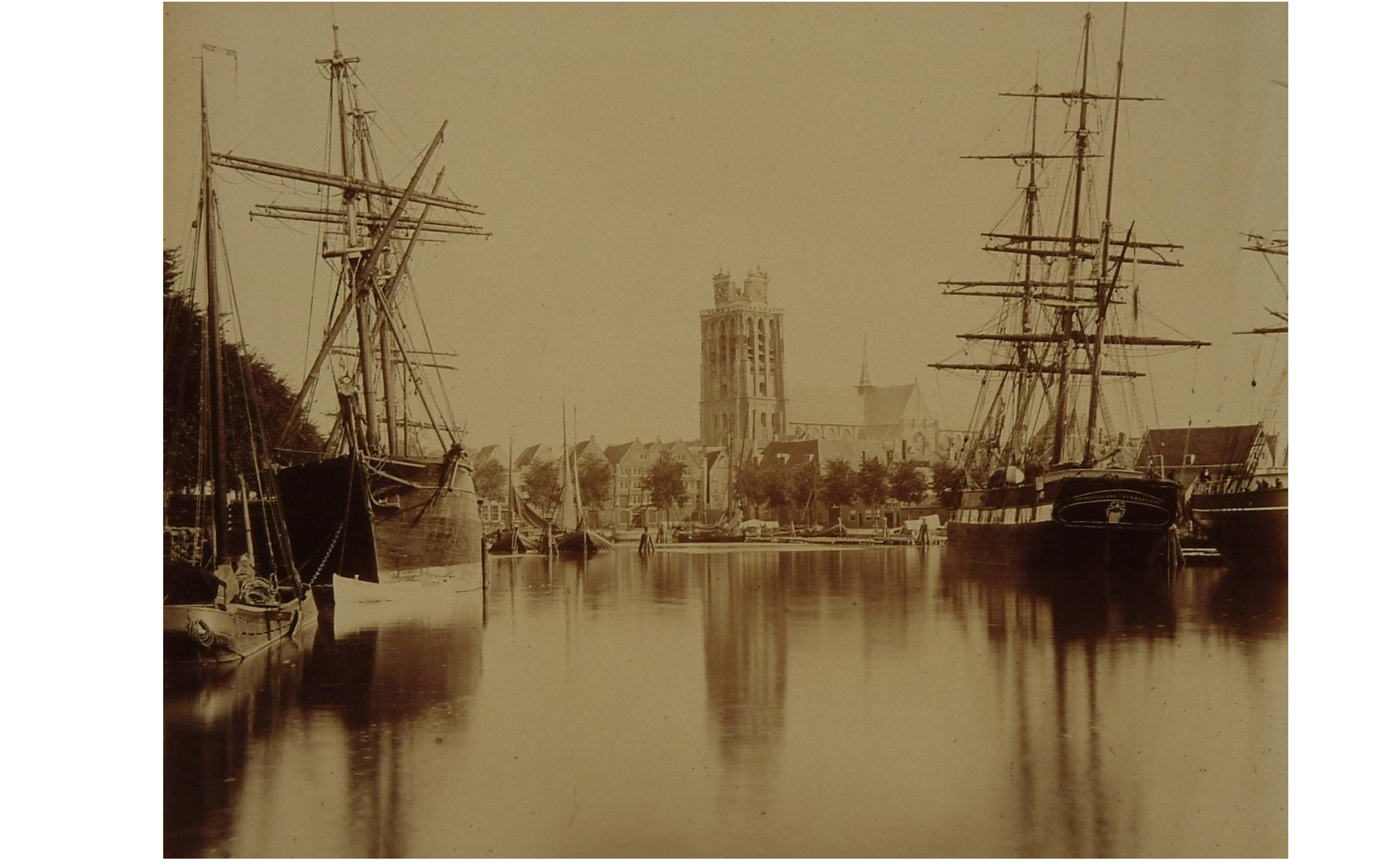
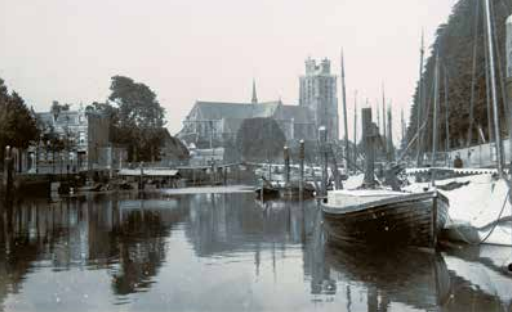
In a photograph by Tollens taken around 1910, the view of the Grote Kerk from Zwijndrecht is still remarkably similar almost a century later. On the left you can see the Blauwpoort (partially blocked), and to the right of the sailing boat the Catrijnepoort (which Turner placed to the left of a sailing boat).

Walk to the Bomkade – this takes approximately 5 minutes.

Gezicht op Dordrecht vanaf Zwijndrecht Dordrecht vanaf het Zwijndrechtse veer

3 - Bomkade

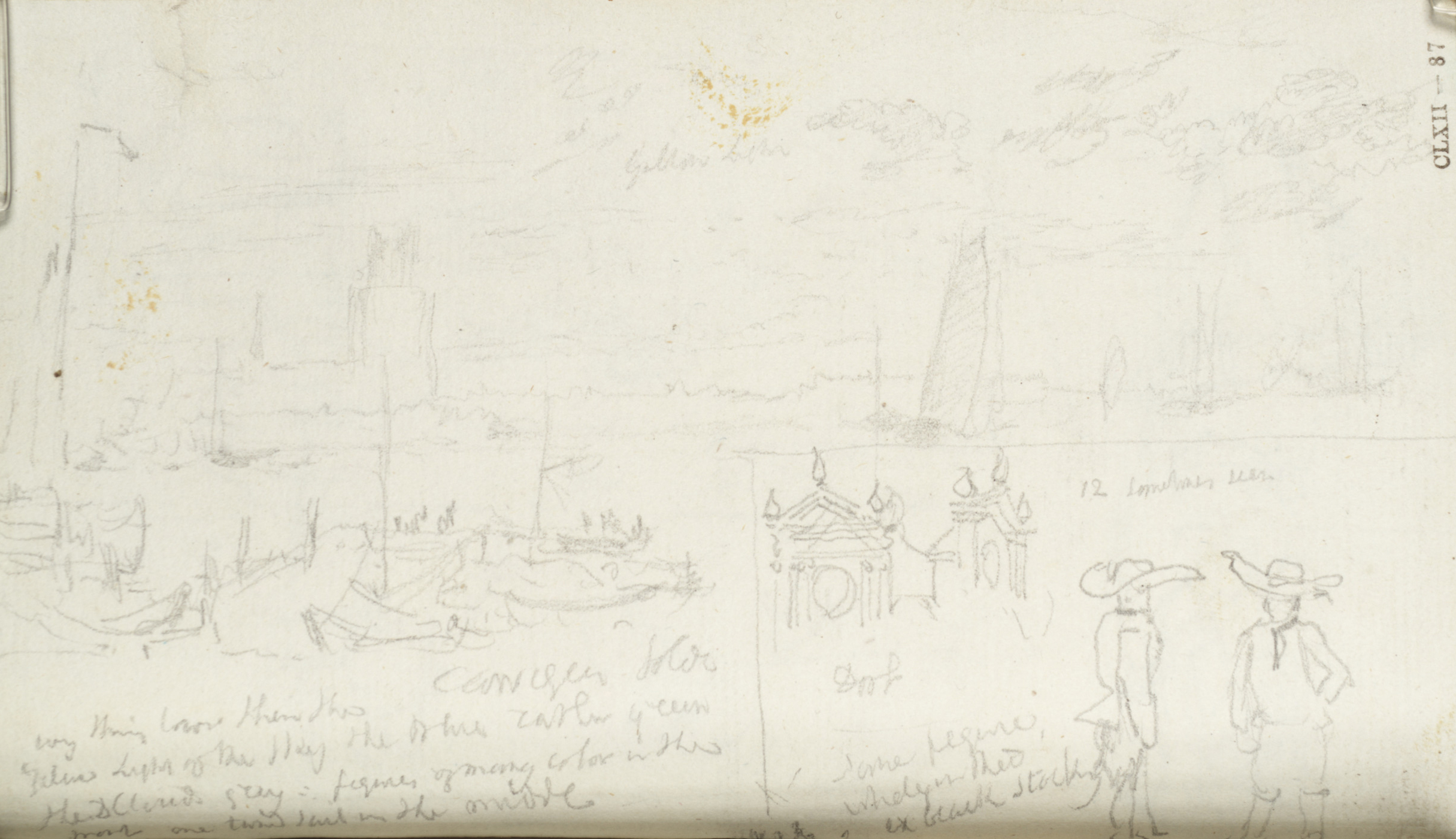
From the Bomkade, Turner sketched the tower of the Grote Kerk from a closer vantage point. The clock faces no longer fitted on the page, so he drew them separately on the facing sheet, on the right below. Above the decorative pediments crowning the four large dials, he noted: ‘12 some-times seen’. On a single sheet Turner made several quick sketches of Dordrecht, adding various notes about the colours of the water and the sky, as well as a small drawing of local clothing.

Walk a little further to the Kalkhaven.

Grote kerk vanaf de Bomkade Gezicht op Dordrecht en detail Kerktoren met figuren

4 - Kalkhaven

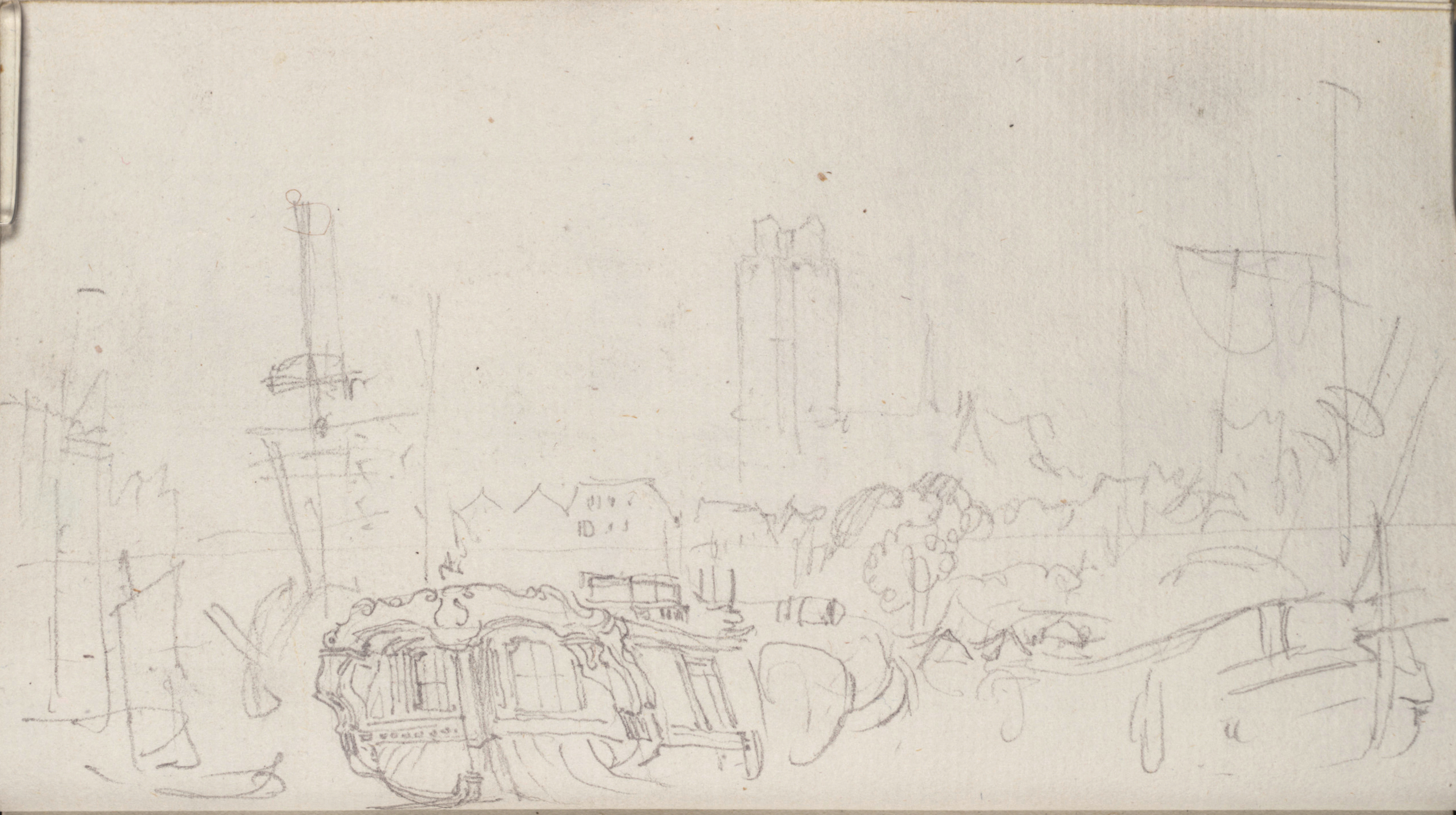
During his visit to Dordrecht in 1817, Turner made several sketches of the Kalkhaven, capturing the activity along the quayside and the bustle on the water. His attention was particularly drawn to the ships, and he produced a detailed drawing of the stern of a Statenjacht (ceremonial state yacht) moored in the harbour. In the Rotterdam Sketchbook of 1835, the Kalkhaven is one of the few clearly recognisable locations in Dordrecht. The drawing is much looser in style. Even the briefest indication was enough for him to recall the scene later in his studio.

Walk for about 10 minutes to the Blauwpoortsplein.

Kalkhaven met Statenjacht Twee schetsen met de Kalkhaven te Dordrecht
Kalkhaven te Dordrecht

5 - Blauwpoortsplein

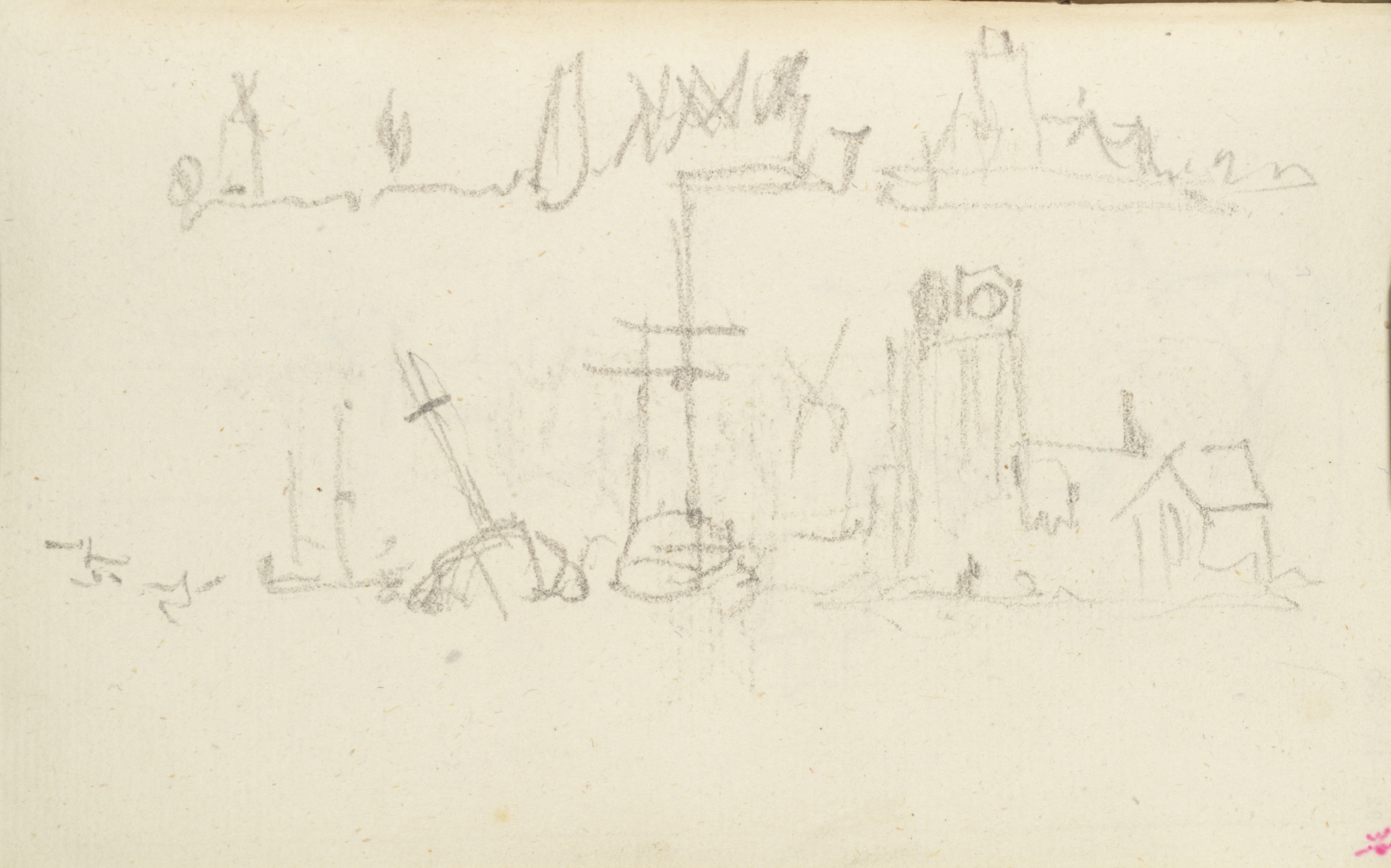
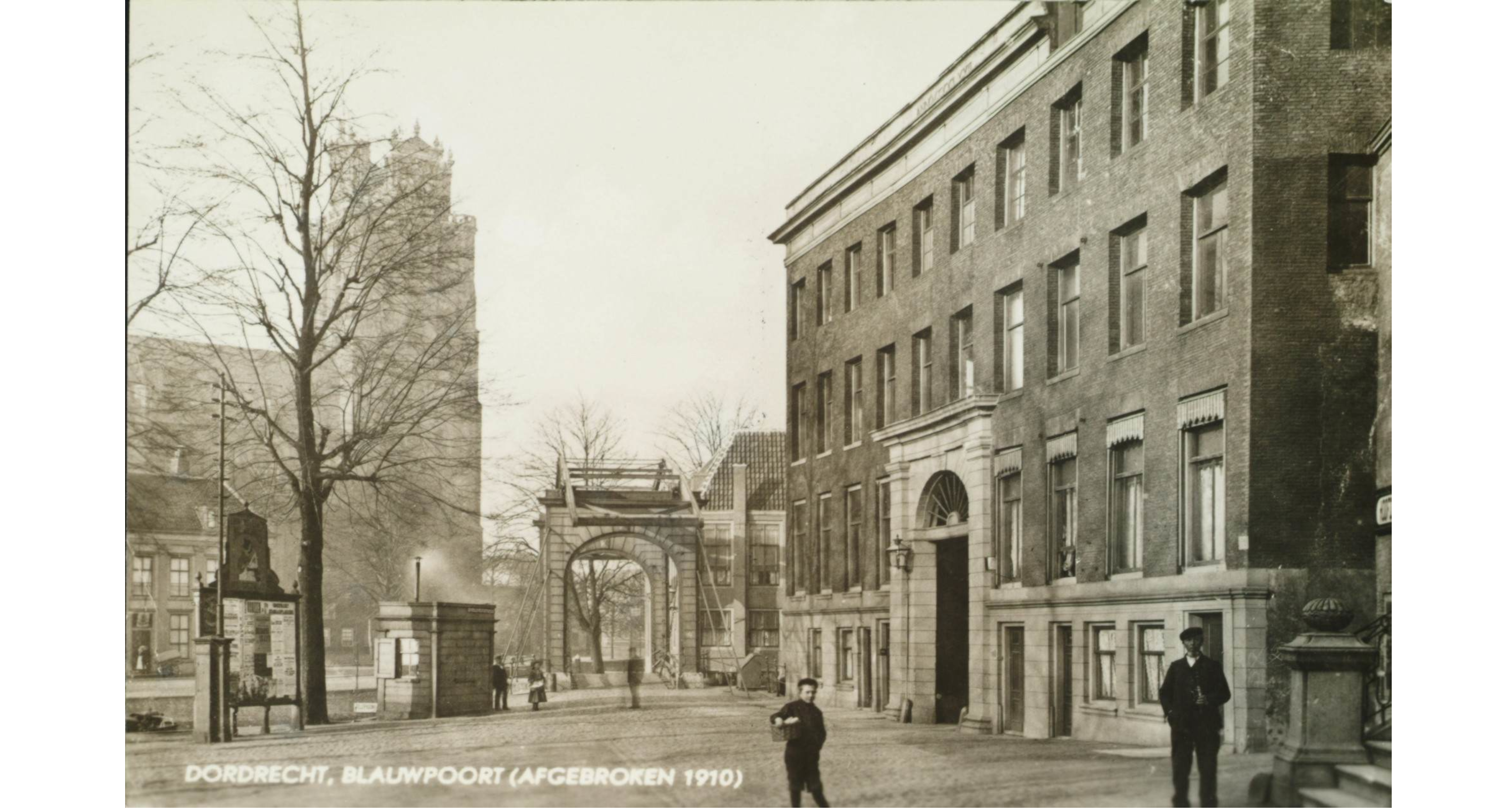
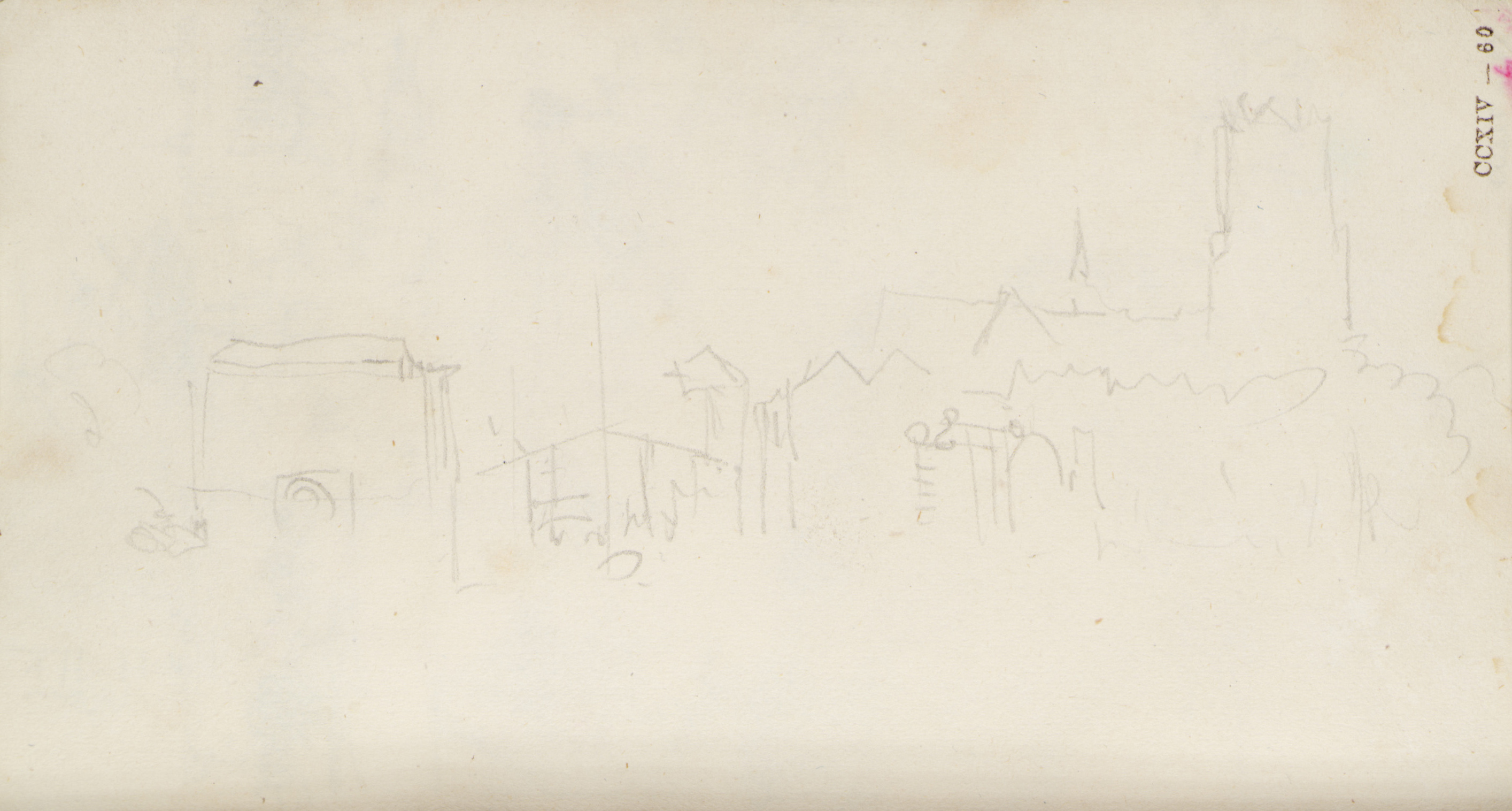
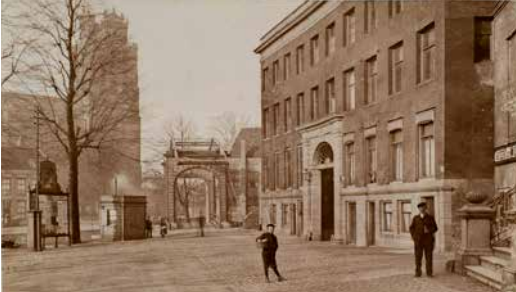
During his second visit to Dordrecht, Turner made this quick sketch. From left to right it shows the Blauwpoort, the Engelenburgerbrug, the Catrijnepoort and the Grote Kerk. The location is no longer recognisable today: the Blauwpoort was demolished in 1910. A photograph from around 1900 shows the gate from the opposite side (Nieuwe Haven), shortly before its demolition, with the Engelenburgerbrug and the Grote Kerk on the left.

Continue via the Nieuwe Haven to the Aardappelmarkt.

Blauwpoort vanaf de Nieuwe Haven met Engelenburgerbrug en Grote Kerk Dordrecht vanaf de rivierzijde met links de Blauwpoort

6 - Aardappelmarkt / Nieuwe Haven

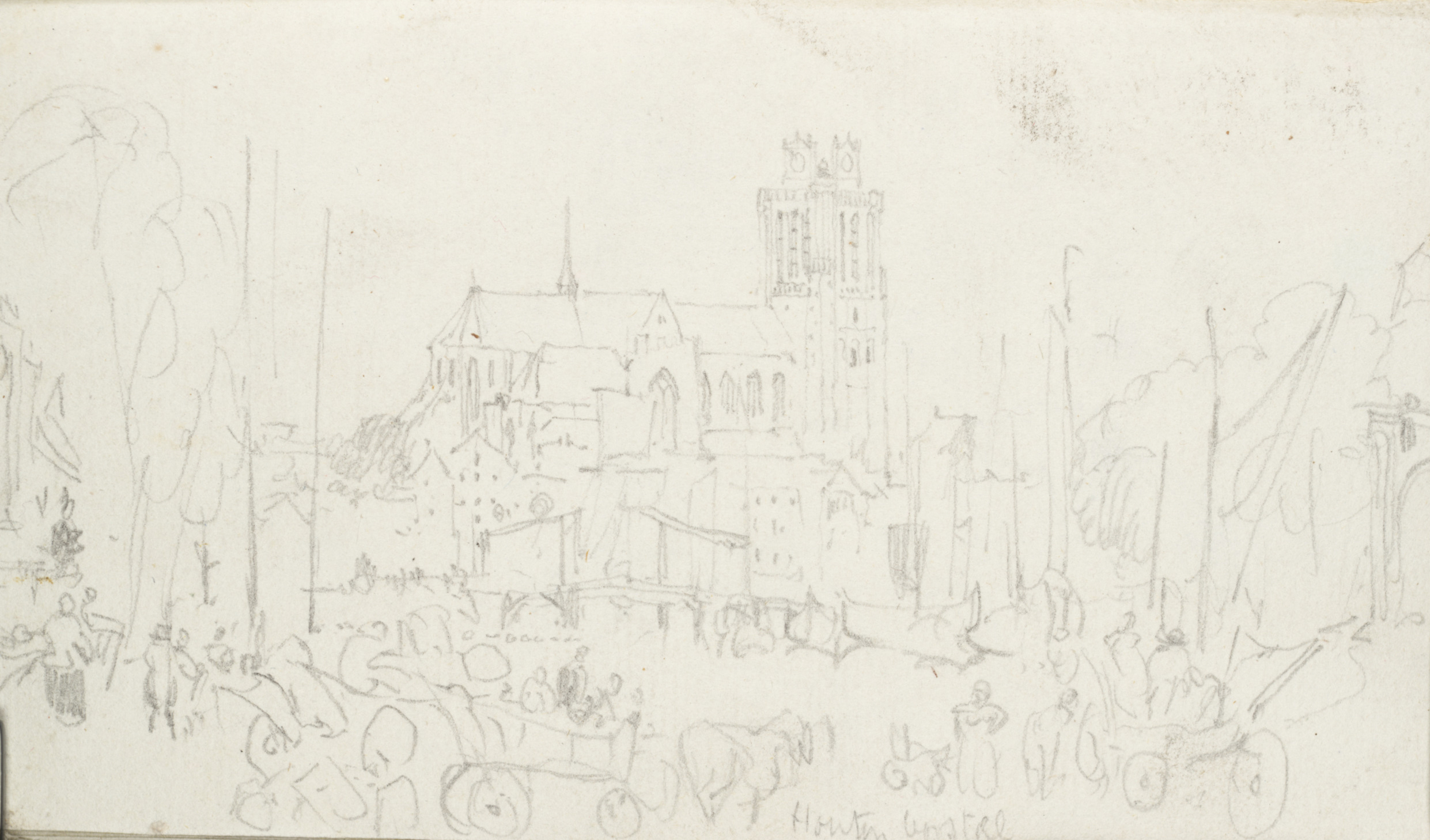
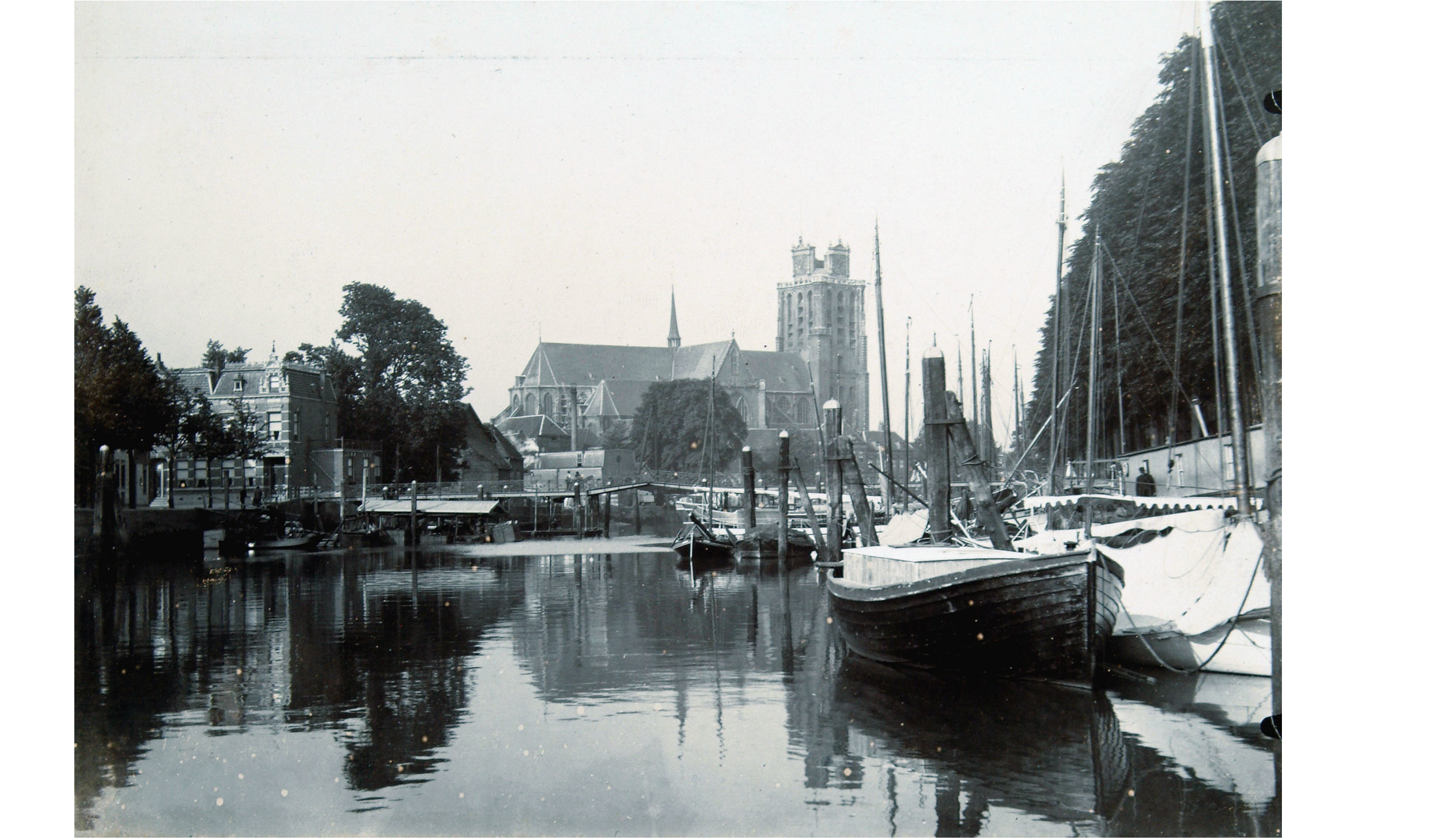
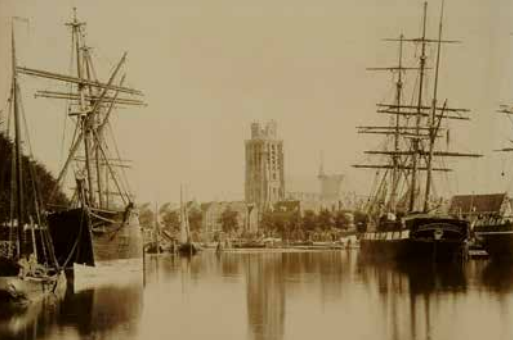
Turner sketched the Grote Kerk from various angles and was also interested in the bustle of everyday street life. A detailed drawing in the Dort Sketchbook shows Dordrecht residents with carts and horses, with the solid mass of the Grote Kerk silhouetted in the background.

This view would later be captured by countless painters and photographers. The Lange IJzerenbrug, visible in the photograph by Hollestelle and still spanning the water today, was not designed until 1855 by the city architect Itz. Turner sketched its wooden predecessor, which was approximately 40 metres long.

Walk a short distance back to Het Vlak.

Grote Kerk vanaf Aardappelmarkt Nieuwe Haven in de richting van de Lange IJzerenbrug en Grote Kerk

7. Het Vlak and the Wolwevershaven

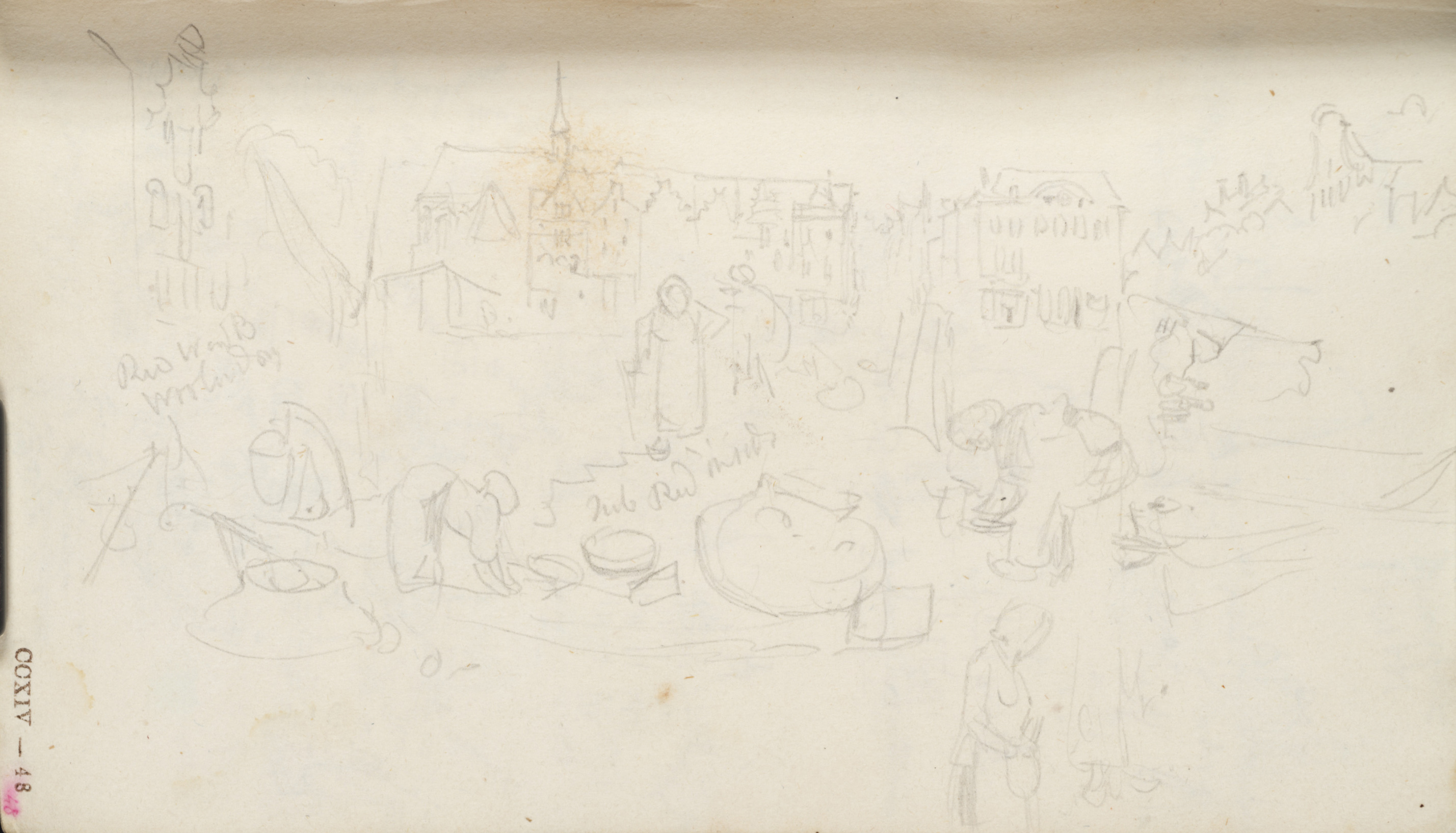
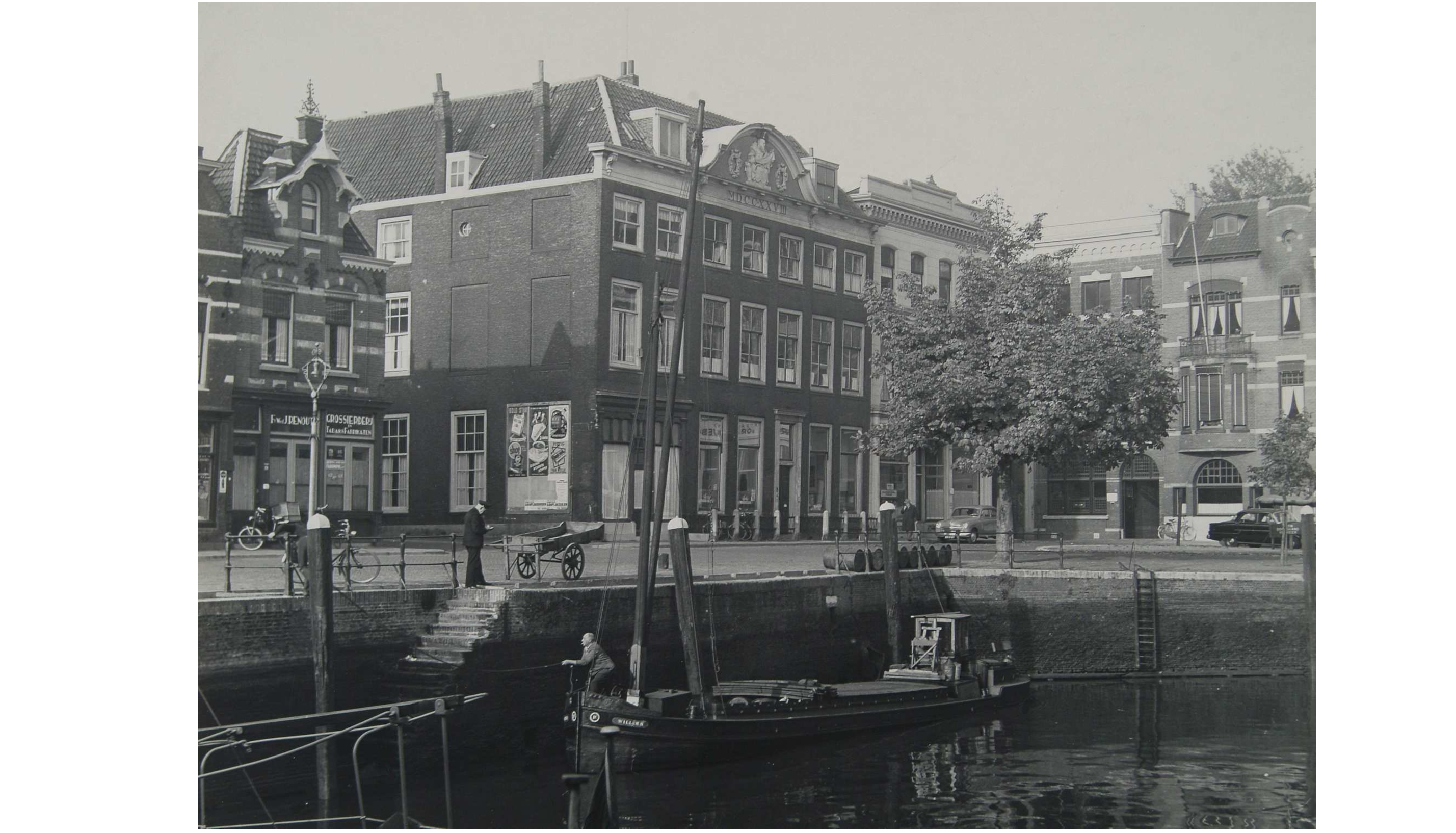
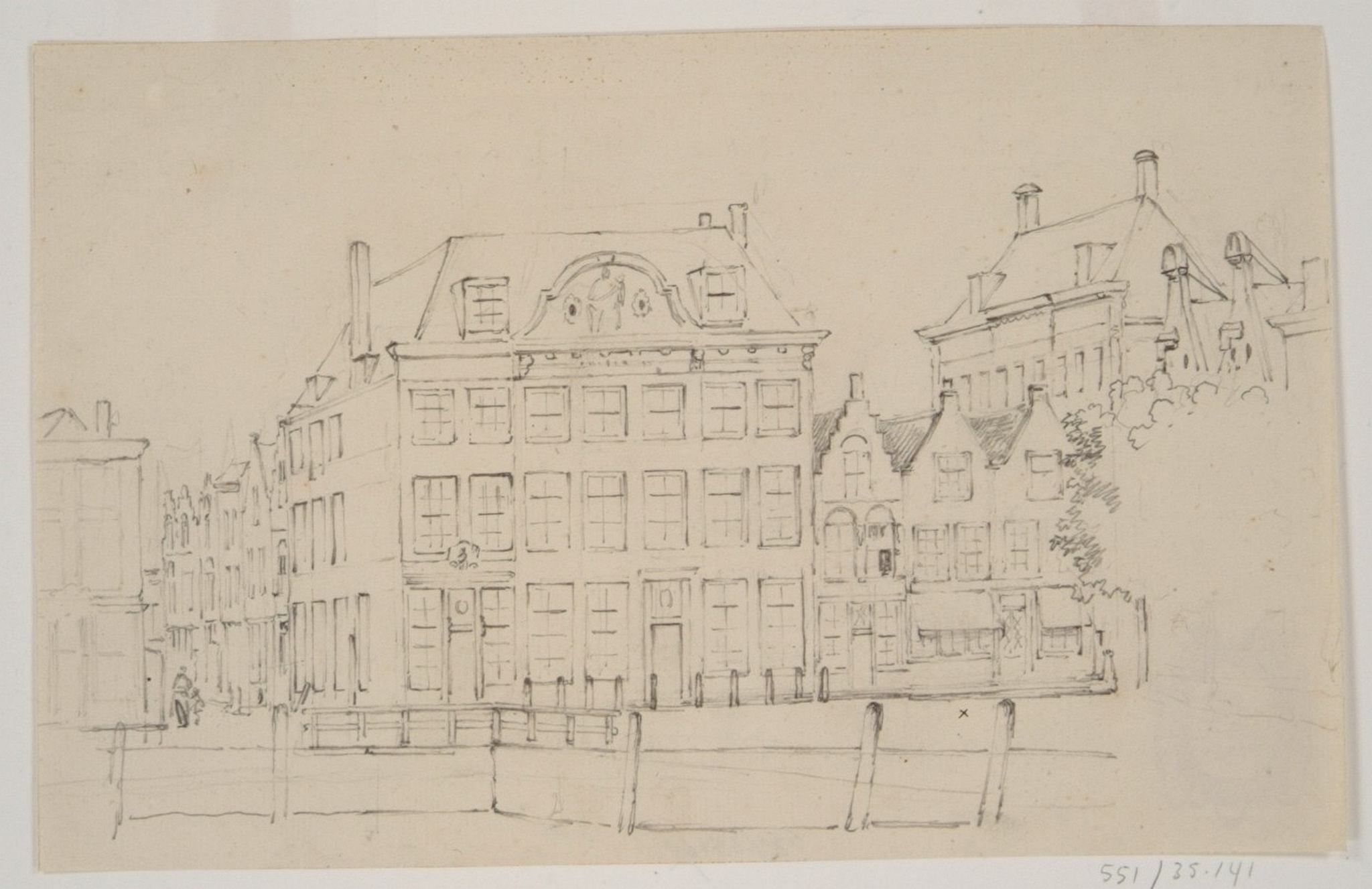
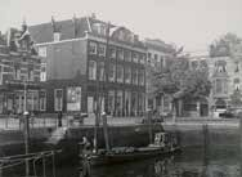
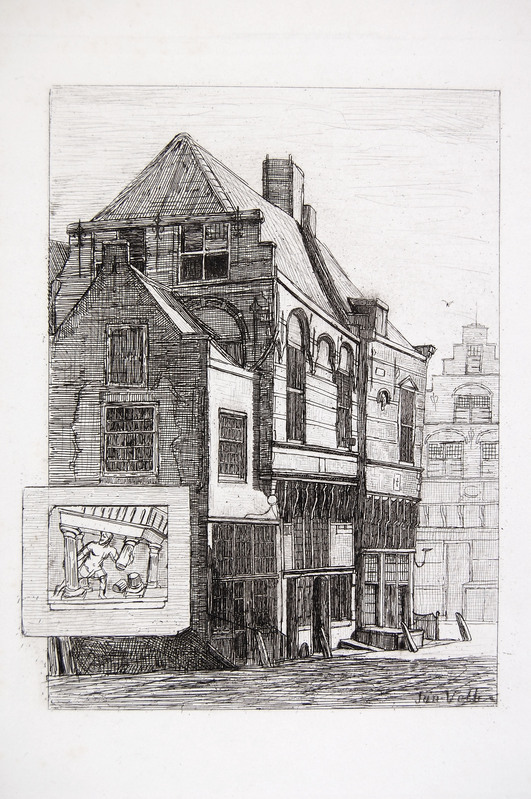
From the Kuipershaven, Turner sketched Het Vlak in 1825. Johannes Rutten made a detailed drawing of the house Chronos (‘Father Time’) on Het Vlak, at the corner of the Hoge Nieuwstraat. The façade can be recognised in the sketch Turner made from a greater distance, showing a view of the Wolwevershaven looking towards Het Vlak and the Grote Kerk. To see this view for yourself, walk along the Wolwevershaven towards the Groothoofd.

A few pages further on in the sketchbook, Turner drew the Wolwevershaven once again, this time from the Groothoofd, with Het Vlak and the Grote Kerk visible i

Walk for about 10 minutes to the Groothoofdspoort.

Het Vlak met bedrijvigheid op de Kuipershaven Huis Chronos (Vader Tijd)
Albertus Brondgeest, Gezicht op Dordrecht foto Dordrecht
Albertus Brondgeest, Gezicht op Dordrecht

8 - Groothoofdspoort

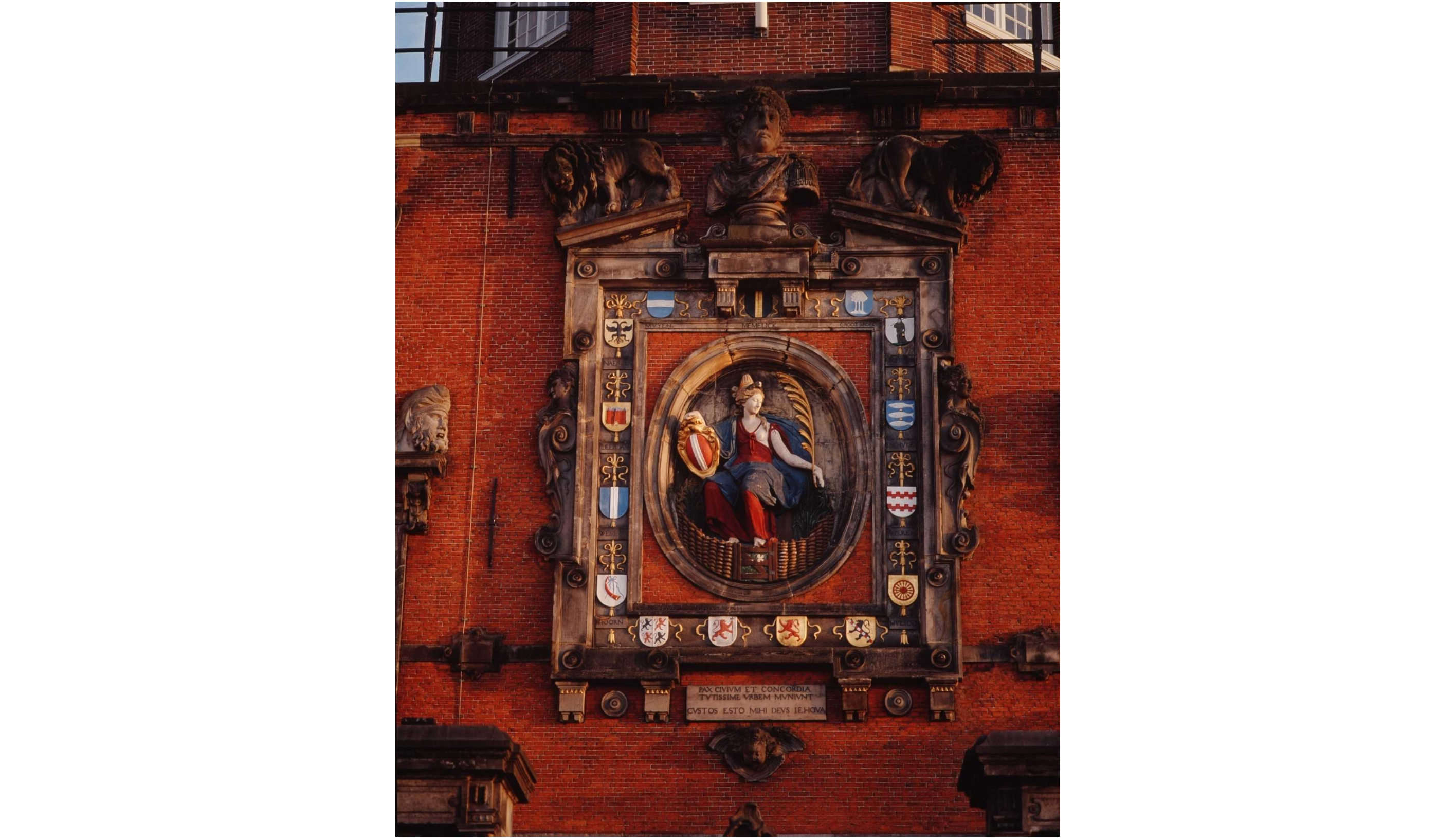
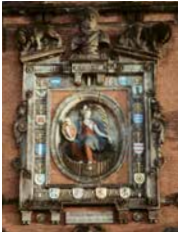
From the riverside of the Groothoofdspoort, Turner made a detailed drawing of this iconic city gate. On the same sheet he sketched ships on the water. On another page he produced a elaborate study of the façade decoration showing the allegorical Dutch Maiden surrounded by the coats of arms of the towns. He carefully noted the names of the towns on the sheet. Turner omitted none of them – except that he did not draw the Dordrecht Maiden herself.

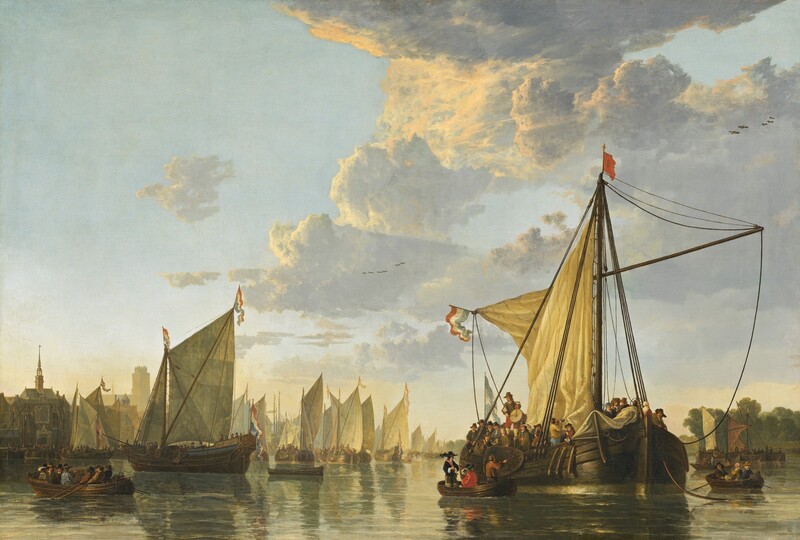
Travelling from Rotterdam, Turner took the Zwaan packet boat to Dordrecht, which moored at the Groothoofd. In his 1817 sketchbook he made notes about the ‘Dordrecht Schuyt’. The vessel plays the leading role in his painting Dort Packet-Boat. Turner already knew De Zwaan: in 1815 he had seen a painting by Cuyp depicting the packet boat as it would have appeared in the seventeenth century.

Groothoofdspoort vanaf de rivierzijde met schepen De Dordtse Maagd met stadswapens op de Groothoofdspoort, rivierzijde
Dort or Dordrecht: The Dort packet-boat from Rotterdam becalmed

9 - Merwekade

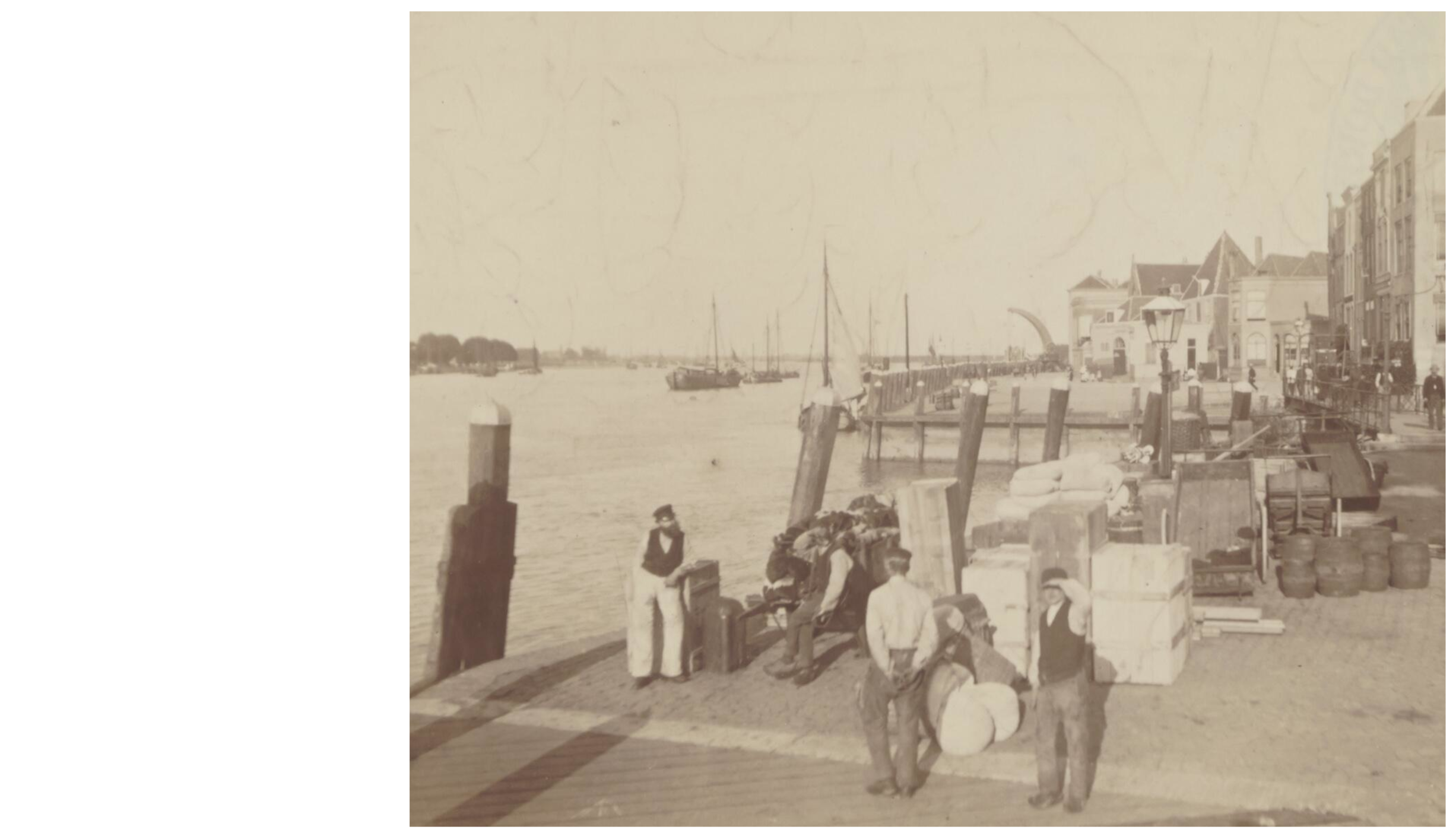
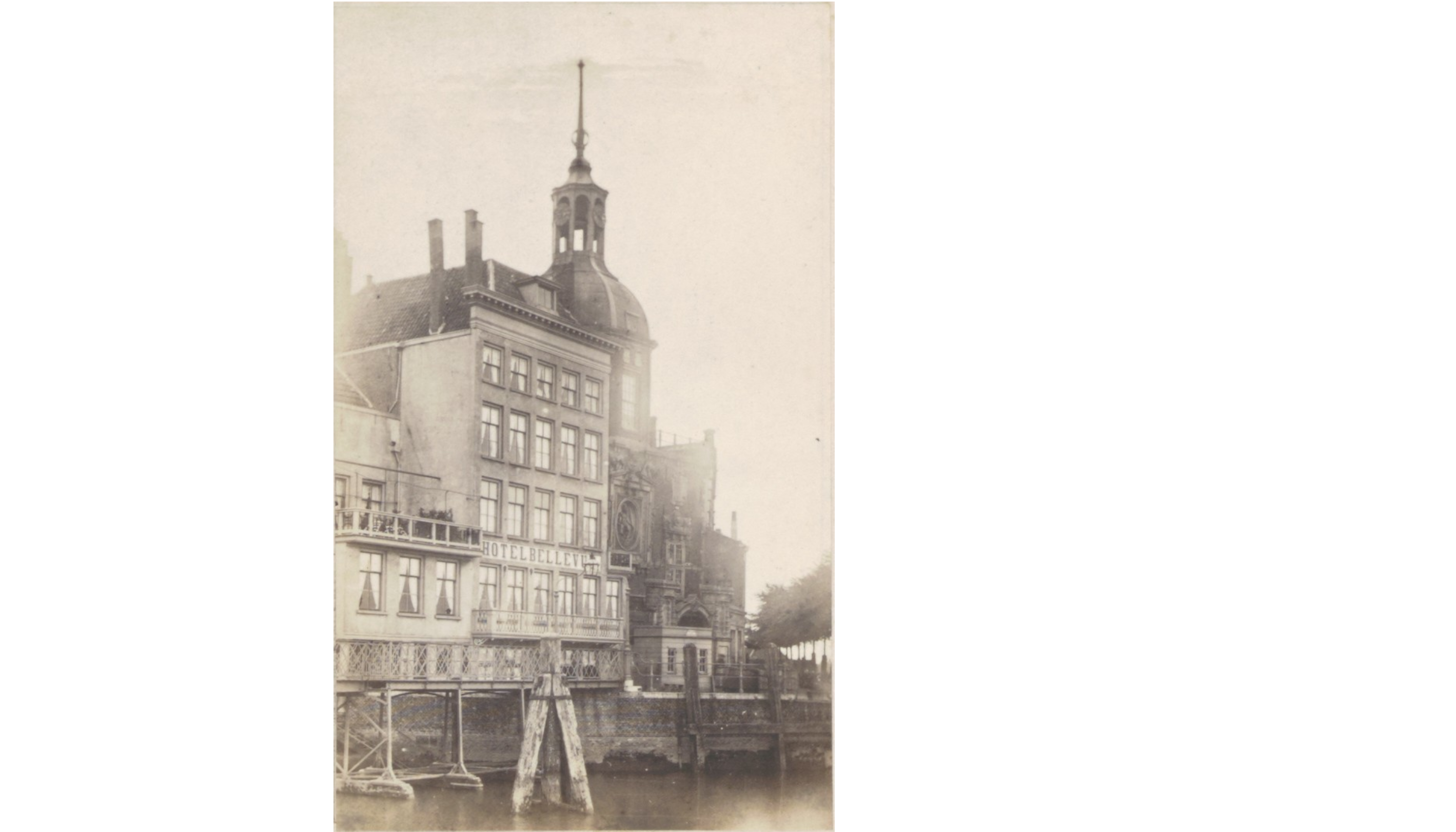
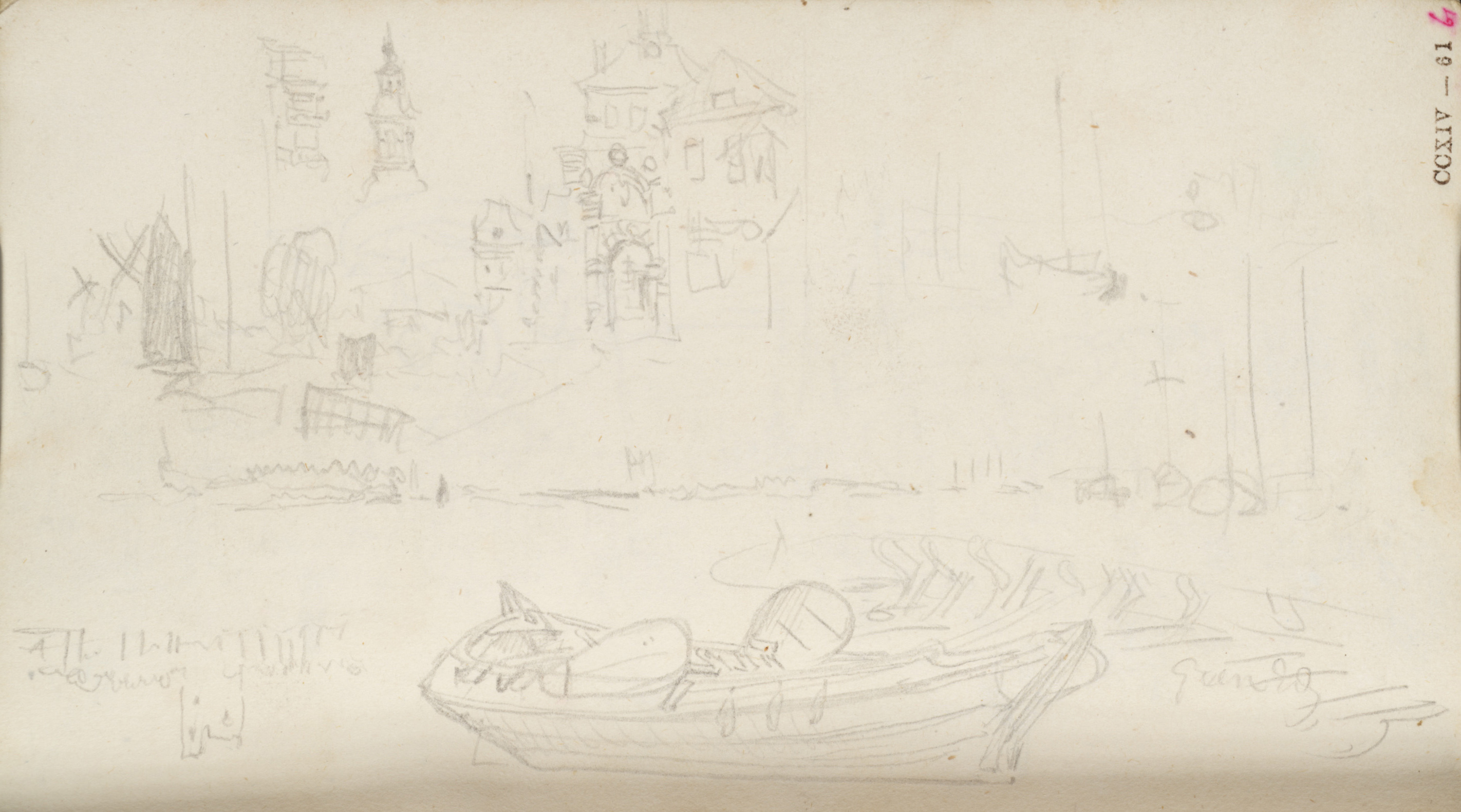
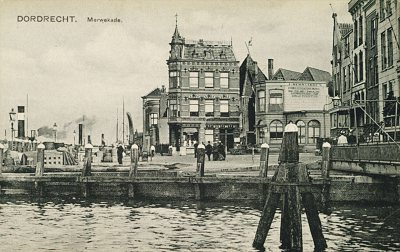
From the Groothoofd, Turner sketched the view towards the Merwekade in 1817, with the Bolwerk to the right and boats on the water. Conversely, in 1825 he drew boats at the quay and the buildings at the Groothoofd from the Merwekade. He added the notes ‘Logement Wijn Bier’ (‘Lodging Wine Beer’) and ‘Hotel Bellevue’. The present Bellevue building dates from 1840.

On the Merwekade you will find the small street called Melkpoortje. Walk towards it.

Merwekade vanaf het Groothoofd foto Dordrecht, Regionaal Archief Dordrecht
Het Groothoofd vanaf de Merwekade Het Groothoofd vanaf de Merwekade

10 - Melkpoortje

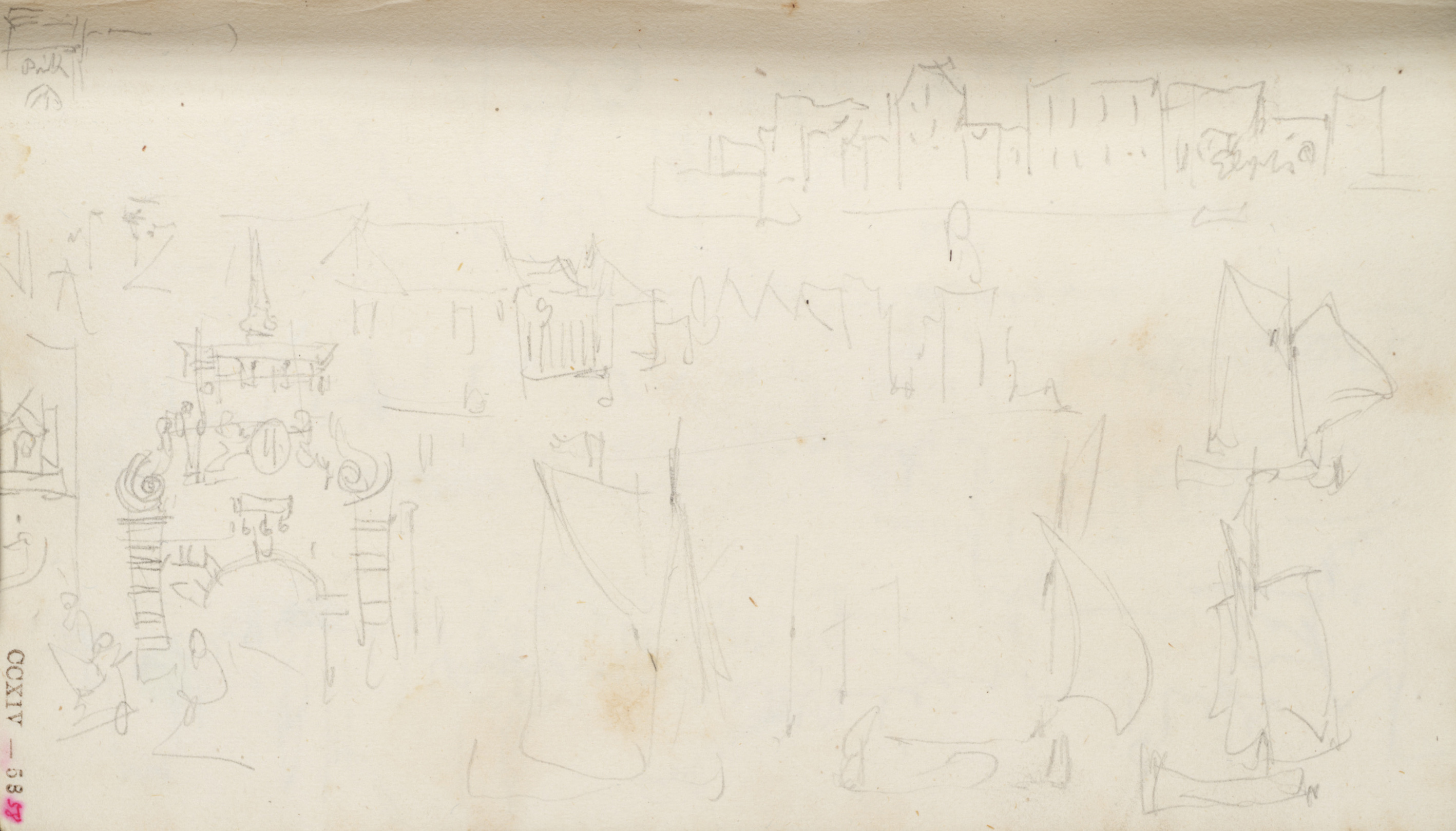
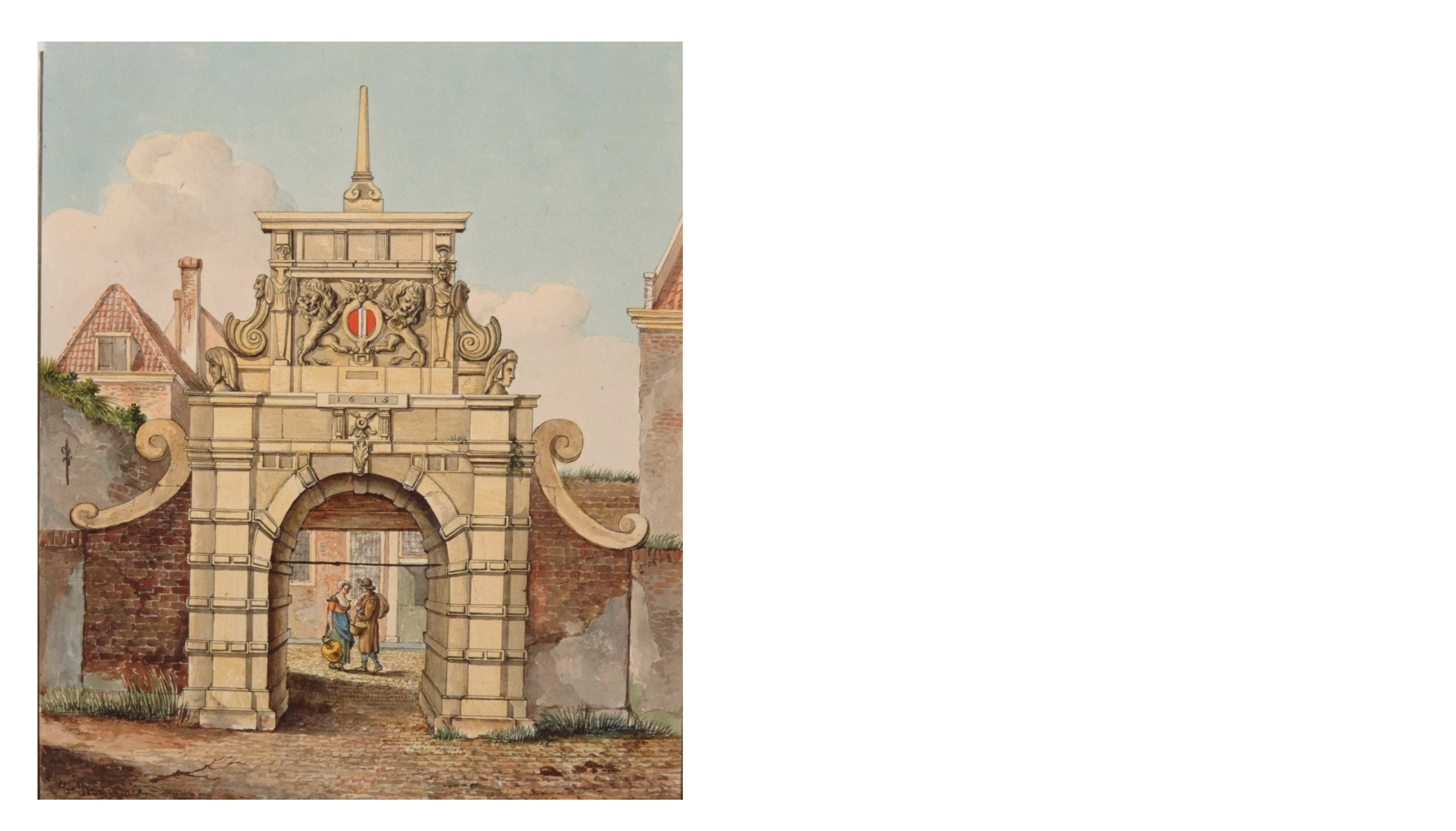
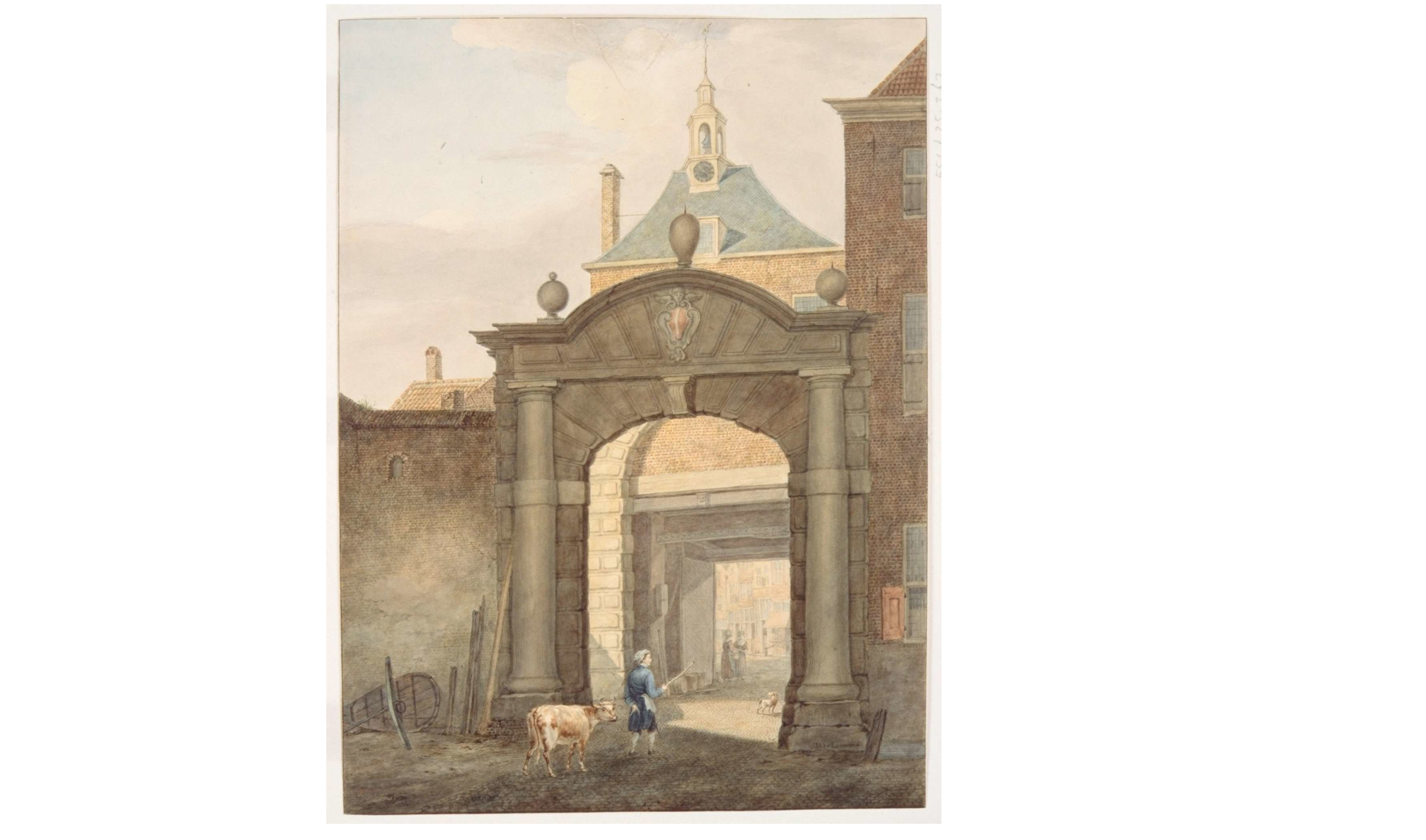
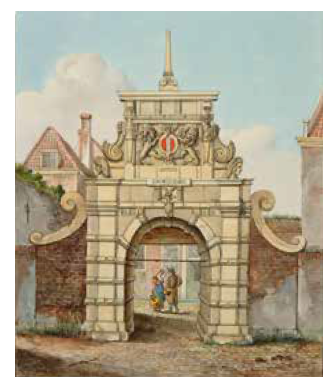
In 1825 Turner depicted the Melkpoortje again, on the left side of a sheet filled with sketches of sailing vessels and house façades, probably those along the Merwekade. Eight years after Turner’s visit, in 1833, the little gate dating from 1615 was demolished. Johannes Boshamer made a watercolour of it shortly beforehand. Today, only the street name recalls the old gateway.

Continue to the Otto Dickeplein, where the Riedijkspoort once stood.

Melkpoortje en gebouwen en schepen langs de Merwekade Het Melkpoortje uit 1615

11 - Riedijkspoort

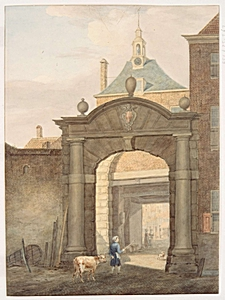
In a sketch of the Riedijkspoort from 1817, Turner indicated the trees using quick, fine pencil lines. He sketched the Riedijkspoort again in 1825, this time from the water. On this sheet and the one beside it are small sketches of the ruins of the Huis te Merwede. In the centre of the sheet he drew a horizon with the ruins positioned directly beneath the gate – upside down.

The Riedijkspoort was demolished in 1833. The people of Dordrecht are nicknamed schapenkoppen (‘sheep heads’) because of a tale associated with this gate: it is said that a man once attempted to enter the city disguised as a sheep to avoid paying tax.

About 3 kilometres outside the historic city centre, on the banks of the River Beneden Merwede, stand the ruins of the Huis te Merwede. These lie outside the walking route but can be visited on your own.

Rietdijkspoort Riedijkspoort, omstreeks 1815

12 - Ruïne Huis te Merwede

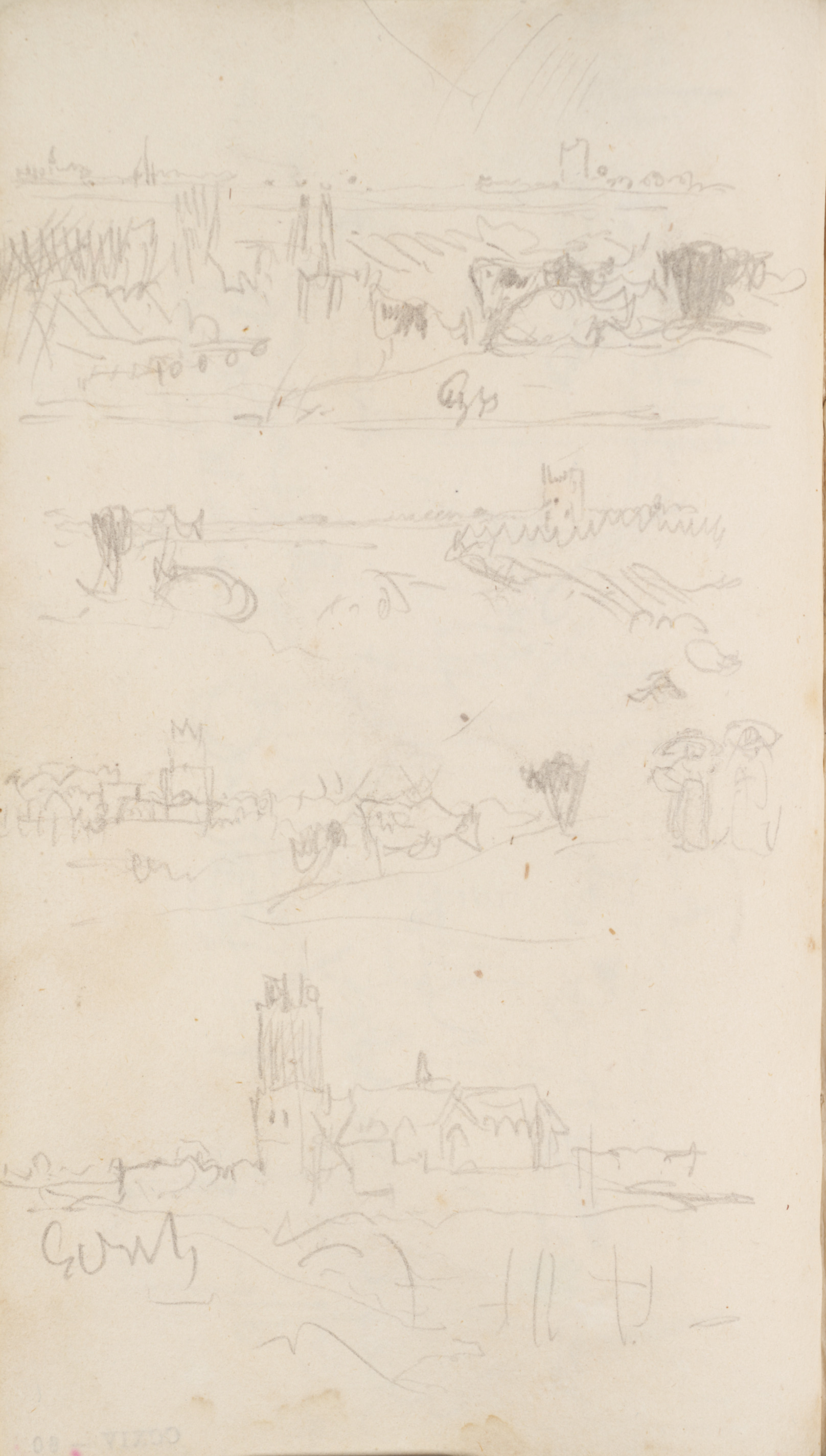
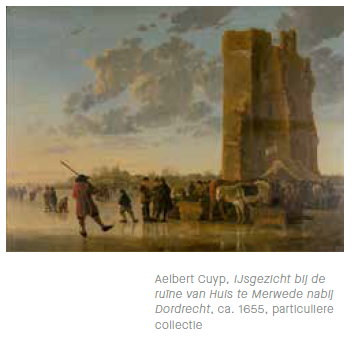
Travelling by boat along the Merwede, Turner passed the ruins of the Huis te Merwede. He sketched some cows and added the note ‘Cuyp’ on the sheet. He had most likely recognised the ruins from Cuyp’s impressive winter landscape, which he had seen in the collection of the Duke of Bridgewater. The ruins have hardly changed since Cuyp’s time – only in the seventeenth century they still stood largely in the water.

In 1835 Turner passed the ruins once more. On his return journey from Prague he reached into his coat pocket for the sketchbook he had used on that trip, and in the blank spaces he drew the Huis te Merwede from the north-east.

Vier aanzichten vanaf de Merwede met de ruine en Cyp en Cows Schetsen van de ruïne van Huis te Merwede en de Grote Kerk bij schets van de Kathedraal van Praag

13 - Boombrug towards the Wijnhaven

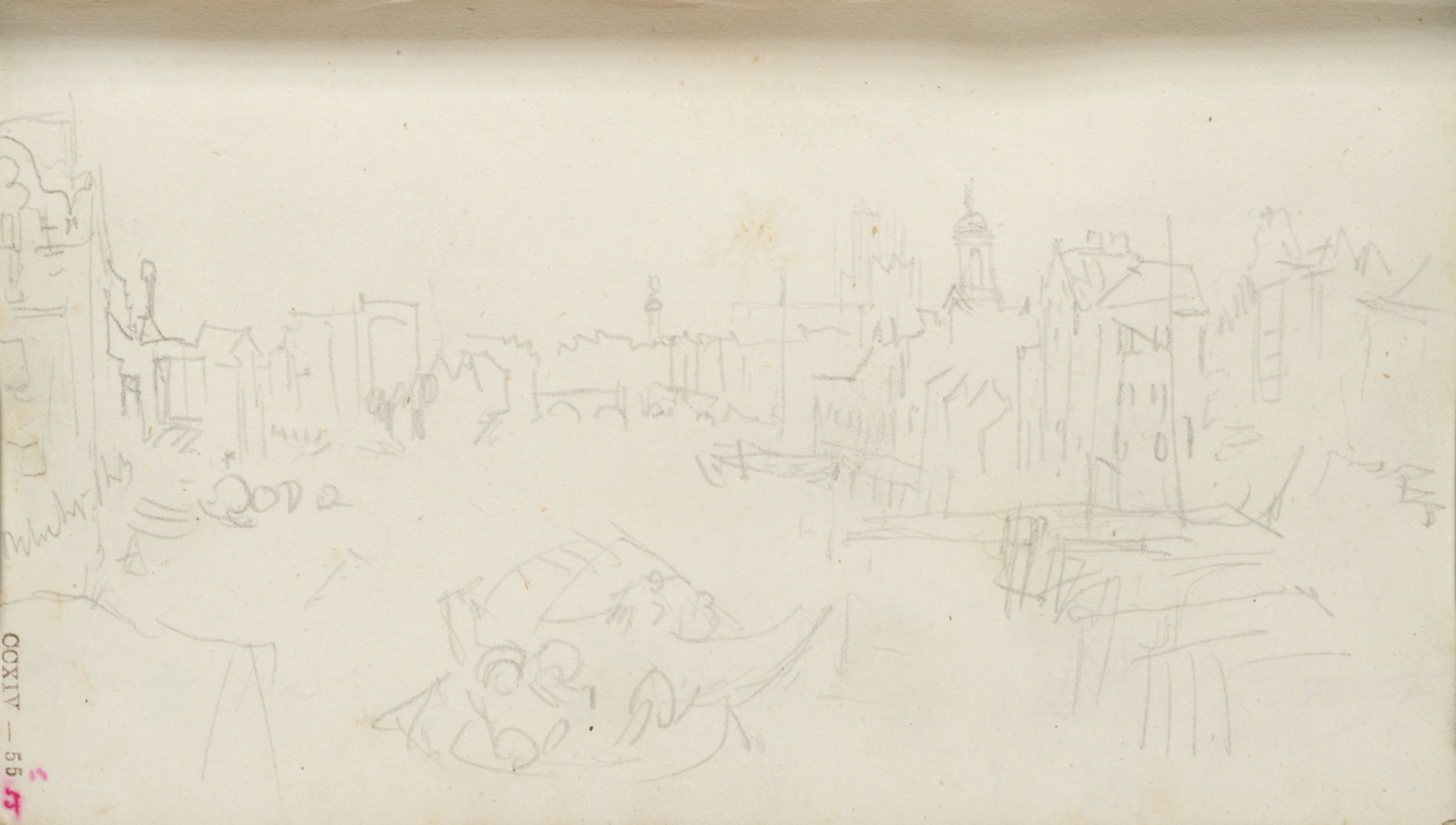
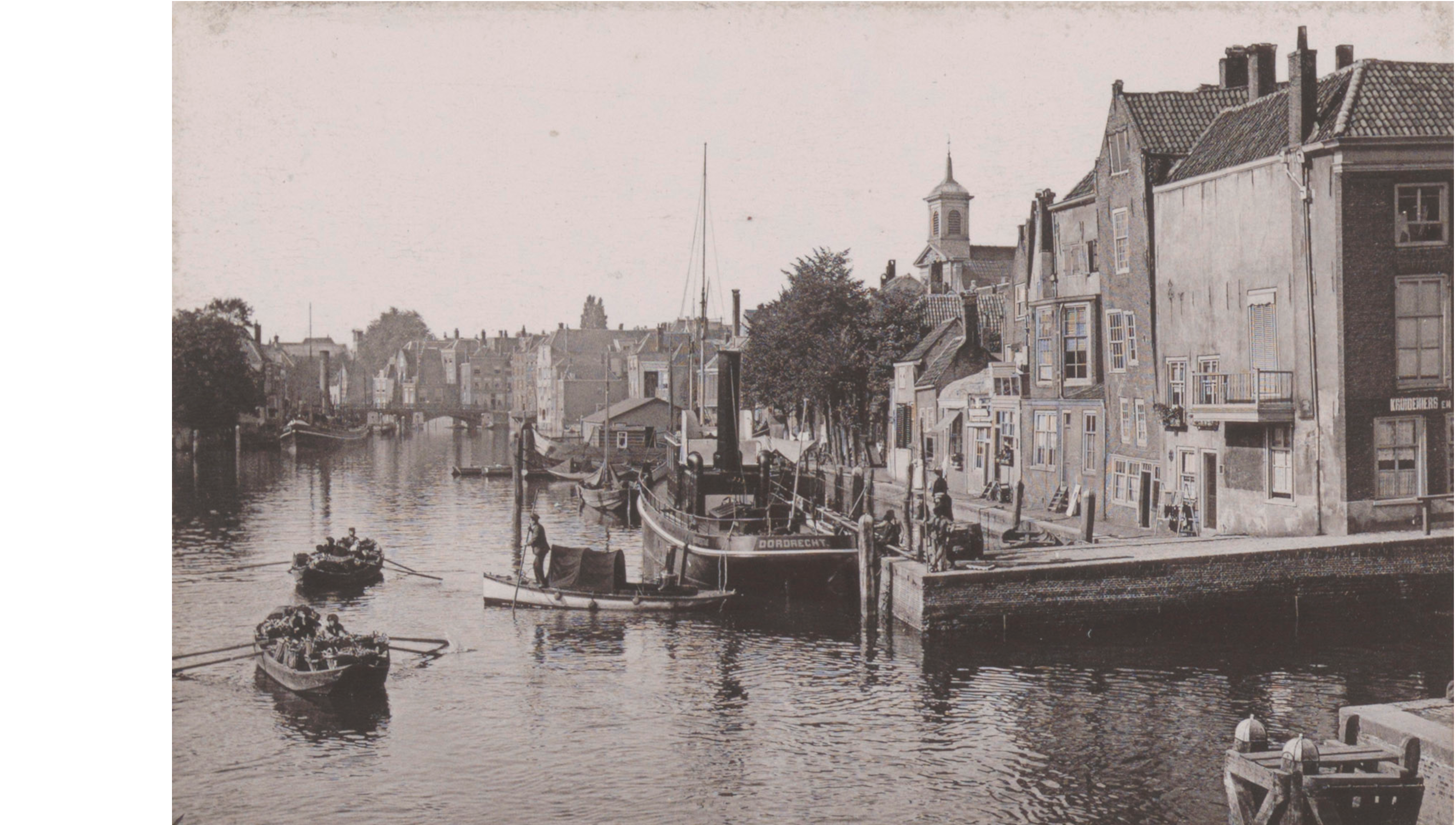
TFrom the Boombrug, Turner sketched in the direction of the Nieuwbrug. The small tower of the Bonifatiuskerk is clearly recognisable on the right, as are the arches of the Nieuwbrug. From the Wijnhaven he sketched the Boombrug with the city side of the Groothoofdspoort. In front of the gate was the ‘Gat van de Marktschuit’, where the packet boat De Zwaan lay moored. In the lower left corner of the sheet he added a quick sketch of the tower of the Bonifatiuskerk on the Wijnstraat.

Wijnhaven richting Nieuwbrug Wijnhaven vanaf de Boombrug richting Nieuwbrug met rechts de Mattenkade
Wijnhaven richting Groothoofdspoort en Boombrug

14 - Nieuwbrug

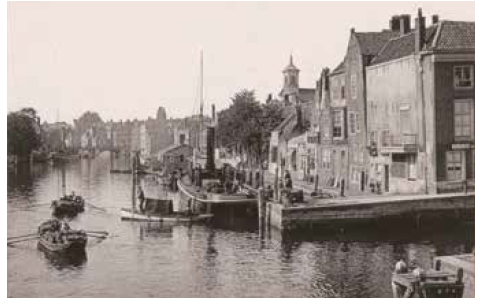
When the packet boat was moored at the Groothoofd, Turner sketched the Wijnhaven from the Boombrug towards the Nieuwbrug, where Cuyp’s house then still stood. The house – Huis Samson – was demolished in 1849 to widen the access to the Nieuwbrug

Turner probably never returned to Dordrecht after 1835, but Cuyp never left his thoughts. In sketchbooks from his other European travels he refers repeatedly to Cuyp – or ‘Cyp’. Turner not only admired Cuyp; in his paintings he also sought to rival the Dordrecht master. As his biographer Walter Thornbury recounts, Turner was unwavering in his conviction about who was the greater artist: ‘He knew as certainly as if an angel had told him, that he had outshone Cuyp.’

Walk to the Boterbeurs.

Wijnhaven richting Nieuwbrug vanaf Boombrug Wijnhaven richting Nieuwbrug vanaf Boombrug

15 - Boterbeurs

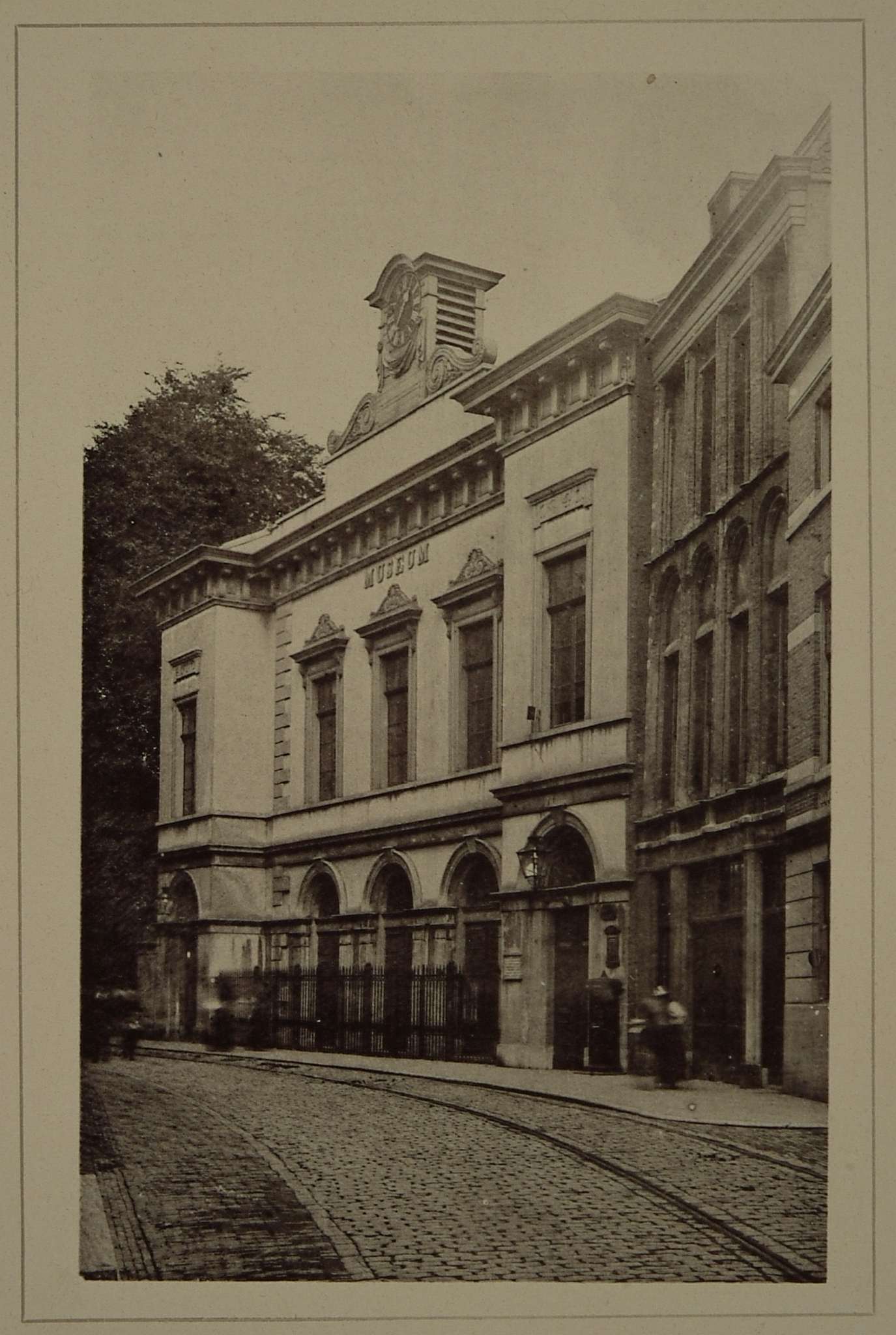
Seven years after Turner’s final visit to the city, the Dordrechts Museum was founded in 1842, housed in the Boterbeurs on the Wijnstraat, close to where Cuyp had once lived. Foreign artists who visited Dordrecht at the end of the nineteenth century came to the museum and signed the visitors’ book. The first painting in the collection was View on the Rhine by the Dordrecht painter Willem de Klerk, a contemporary of Turner. Like Turner, De Klerk travelled along the Rhine in Germany. Turner’s visits to Dordrecht were often part of such a Rhine journey.

Around 1900 the museum’s art collection had grown so much that a larger building was needed. In 1904 the Dordrechts Museum moved to its current home.

This was the end of the guided wall. We hope you enjoyed it and could see Dordrecht through the eyes of Turner for a while.

Dordrechts Museum in gebouw de Boterbeurs aan de Wijnstraat Gezicht aan de Rijn

Colofon

This guide walk is based on de guidebook Turner in Dordrecht, Dordrechts Museum 2021 (sold out)

Photo's in this walk are from the musea en institutions, mentioned in the captions. Alle sketches of Turner: @ Tate, Londen.

The exhibiton Water & Light has been made possible through the support of The Yale Center for British Art and the Dr. Lee MacCormick Edwards Charitable Foundation, de Vriendenloterij, the Mondriaan Fonds, the Provincie Zuid-Holland, the Gravin van Bylandt Stichting, Fonds 21, Stichting Zabawas, the Lancey Foundation, the Ministerie van Buitenlandse Zaken and the Rijksdienst voor het Cultureel Erfgoed.

1 - Dordrechts Museum

2 - Grote Kerk

3 - Bomkade

4 - Kalkhaven

5 - Blauwpoortsplein

6 - Aardappelmarkt

7 - Het Vlak

8 - Groothoofdspoort

9 - Merwekade

10 - Melkpoortje

11 - Riedijkspoort

12 - Ruïne Huis te Merwede

13 - Boombrug

14 - Nieuwbrug

15 - Boterbeurs

16 - Colofon